14 hours ago
Genesis “New Year”, what do we not know about the traditional celebrations of this night!
Periskopi(5 years ago)
(5 years ago)Civilizations around the world have celebrated the start of every new year for at least four millenniums. Today, most states celebrate the New Year on December 31st, the last day of the Gregorian calendar, and continue until the early hours of January 1, writes “IconStyle” Common traditions include party participation, eating [...]
Civilizations around the world have celebrated the start of every new year for at least four millenniums.
Today, most states celebrate the New Year on December 31st, the last day of the Gregorian calendar, and continue until the early hours of January 1, writes “IconStyle”
Common traditions include participating in holidays, eating New Year's special foods, realising New Year's goals and performing fireworks, broadcasts news.
Early New Year's Festivals
Early celebrations recorded in honor of the arrival of a New Year date back some 4,000 years to ancient Babylon. For the Babylonians, the first new moon after the internal equinox the day at the end of March warned of a New Year's beginning.
They celebrated with a massive religious festival called Akitu (delined from the Macedonian word) that included a different ritual in each of its 11 days.
In addition to New Year's, the Attic celebrated the mythic victory of the Babylonian god of Heavend over the bad goddess of the Tiamat Sea and served an important political purpose: It was during this time that a new king was crowned or that the divine mandate of the present ruler was divinely renewed.
Read also: The baby was born with no eyes... Child Released From Parents
January, New Year's Day
The early Roman calendar consisted of 10 months and 304 days, with each new year beginning in internal equinox; according to tradition, it was created by Romulus, the founder of Rome, in the eighth century B.C.
A later king, Numa Pomplius, is estimated to have added the months of January and February. Over the centuries, the calendar came out of sync with the sun, and in 46 BC, the Caesar Empire decided to solve the problem by consulting the most prominent astronomers and mathematicians of his day.
He introduced the Julian calendar, which is similar to the calendar most of the world use today.
As part of his reform, Caesar called January 1 as the first day of the year, in part to honor the name of the month: Janus, the Roman god of the beginning, whose two faces allowed him to look back into the past and forward to the future.
The Romans celebrated by offering sacrifices to Janus, exchanging gifts to each other, decorating their homes with laurels and participating in mindless parties.
In medieval Europe, Christian leaders temporarily replaced January 1st as the first of the year with more religious significance, such as December 25 (the anniversary of Jesus ' birth) and 25 Mars (Festa of the Declaration); Pope Gregory XII restored January 1st as New Year's Day in 1582.
New Year's Traditions
In many places, New Year's celebrations begin on the evening of December 31st and continue in the early hours of January 1st. People enjoy foods that are supposed to give them good luck for next year.
In Spain and some other Spanish - speaking countries, people consume grapes by symbolizing their hopes for the months before midnight.
In many parts of the world, traditional New Year's dishes contain legumes, which are thought to be like future financial currency and success in the future; other examples are the lens in Italy and peas in the United States.
Because pigs represent progress and prosperity in some cultures, pork is consumed on New Year's Eve in Cuba, Austria, Hungary, Portugal and other countries.
Dessert and ring-shaped pasta, a sign that the year will come full, is the custom that takes place in the Netherlands, Mexico, Greece.
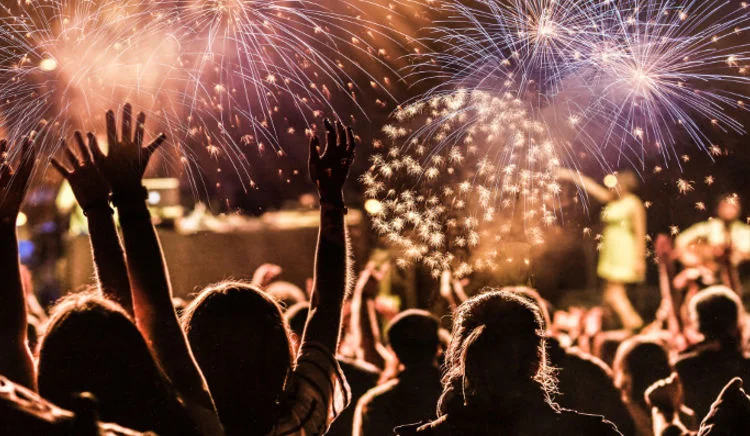
Other customs common around the world include fireworks and songs to welcome the new year.
The practice of objectives for the new year is thought to have first come true among the ancient Babylonians, who made promises to gain the favor of the gods and begin the holiday year on the good leg.
In the United States, New Year's most ike traditions are the throwing of a giant ball in Times Square City of New York City at midnight.
Millions of people worldwide observe the event, which has taken place almost every year since 1907.