a minute ago
Why do international organisations call for schools to stay open during the pandemic?
Periskopi(6 years ago)
(6 years ago)The United Nations Educational, Scientific, and Cultural Organization (UNESCO), the United Nations Children's Fund (UNICEF) and the World Bank have called for schools around the world to remain open during the pandemic caused by coronary. In a report released on October 28, all three of these organisations said that at the peak [...]
The United Nations Educational, Scientific, and Cultural Organization (UNESCO), the United Nations Children's Fund (UNICEF) and the World Bank have called for schools around the world to remain open during the pandemic caused by coronary.
In a report released on October 28th, the three organisations said that at the height of “closing” due to the pandemic, more than 1.5 billion children were affected by the closure of schools, which they say caused a global crisis of unprecedented learning.
However, even before the teaching pandemic was in crisis, these three organizations warned that half the decades in low and middle income countries could not understand a simple written sentence and that more than one quarter of a billion children did not go to school. Coronervirus' pandemic has only exacerbated these inequalities, especially by affecting schoolchildren in poor countries.
National governments around the world soon applied distance instruction, new health protocols, and re-opening plans, but these policies still changed greatly based on the income of each state.
Short vacations in child schooling can also have negative long - term effects on their learning. Although governments' responses to the security and opportunity of distance learning have been rapid, these organisations warn of the importance of understanding who had access to distance learning, how these methods were used, and the extent of their effectiveness.
Generally, the internet and television were the most widely used methods of learning, followed by written material to receive at home and radio learning. These organizations also note that the percentage of students who do not have internet access at home differs from 15 percent in Western Europe and North America to 80 percent in sub-Saharan Africa.
Since September 2020, most countries have fully or in part reopened their schools. Plans to reopen schools, however, differ. High-income countries are more likely to open schools compared to lower-income countries where these countries are more likely to reopen pre-school institutions.
The approach to return to school was also different, since wealthy countries used more of a combination of distance learning and individual teaching (hibrid). More than half of the world's countries combine distant and classroom education. However, this approach still differs greatly according to the income of the respective states.
In most low-income countries, schools have been reopened and students have returned to school banks. Meanwhile, countries with high and medium incomes are more likely to use combined scripts of distance learning and individual learning.
During the past week, due to the presentation of positive cases with Coronavirus, among students and teachers, 14 schools in Kosovo have been closed, while learning has gone online. The Kukay Sunline, official for education and science news, has told REL that the number of students infected with coronarys is 130, while the teachers are 148.
Otherwise, the Ministry of Education in Kosovo has predicted that in this school year, learning will be realised through three scenarios. Scene A has to do with learning in school environments. Screenplay B, or combined learning involves the partial return of students to schools (school pressure combined and with learning in distance) and scenario C is learning at a distance or online.
In northern Macedonia, online education in primary and middle education is developing with numerous problems in particular of technical nature, due to the lack of Internet in many schools, especially peripheral ones, while urban centres have the load of the network that leads to the disruption of learning. Home learning has started on October 1st as it develops through a unique platform created by the Ministry of Education. Teachers are obliged to develop it with physical presence in schools, while students follow it from home through various electronic communication devices.
In Serbia, elementary school students go to school, while high school students go to school one week, and next week they learn from distance. Branislav Tiodovic, a member of the crisis staff, told the media on October 30th that the issue of closing schools and gardens was not raised and that this is the position that exists even in Europe.
In Croatia, about 1,000 children and about 200 school employees have been infected with coronarys and learning in more than 80 percent of cases are conducted in classrooms.
The restrictions that countries are recently setting up in Europe to prevent the spread of the choreography does not include closing schools.
Violent protests have erupted throughout Italy over new restrictions on the curbing of the coronary. As for schools, new restrictions that are in effect until November 24 are forecasting that 75 percent of secondary school education and Italian universities develop online rather than school facilities.
German Chancellor Angela Merkel confirmed on October 28th that Germany will enter partial closure from November 2nd due to the difficult epidemiological situation. Schools and gardens will remain open.
France has also returned to the national blockade from October 30th. Unlike blockades in March, most schools remain open.
The United Kingdom, which will enter total isolation from November 5th, will not close schools, just like Austria, as of November 3rd, will go to partial closure, but will keep educational institutions open.
Throughout Europe, only in Sweden, elementary schools and gardens from the beginning of the pandemic have not been closed, and educational institutions still function normally, as in Belarus and Russia. Sweden has recommended that secondary schools and faculties be passed on online instruction, but there is no decision to close all schools.
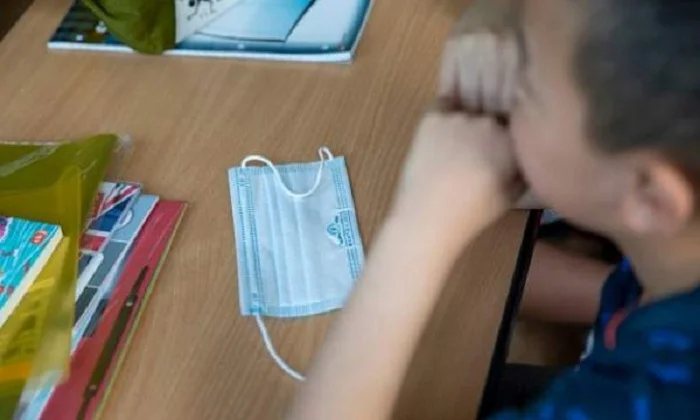
Medical experts tell of many things that were unknown this spring: with adequate precautions, the degree of coronavirus transmission in schools is relatively low, especially among the youngest students. Children who are infected usually have mild symptoms and measures such as wearing masks, physical distance, and ventilation are more effective than anticipated.
The European Center for Disease Prevention and Control found that children account for less than 5 percent of all coronary cases reported in the 27 countries of the European Union and Britain.