4 hours ago
Court in Serbia not informed of mass cemetery near Raska
Periskopi(6 years ago)
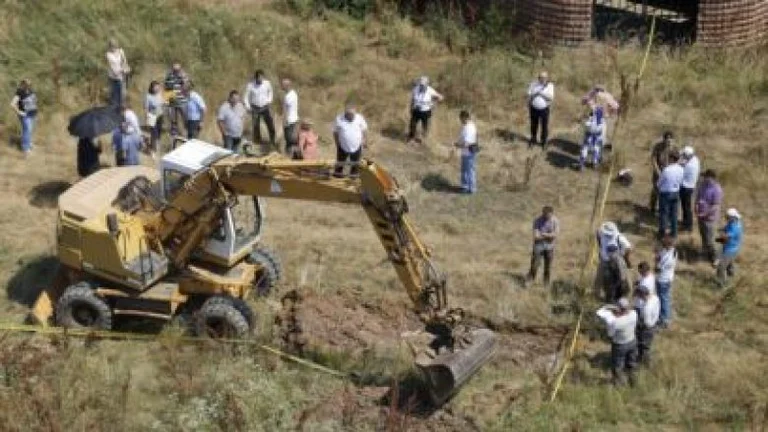
(6 years ago)The Supreme Court in Belgrade has not been handed over to the announcement of finding mortar remains on 16 November in the vicinity of Raska in Serbia, which allegedly belonged to Albanian victims from Kosovo, reportedly in a response to this court provided Radio Free Europe. Asked if the court was notified [...]
Asked whether the court was notified on this case and what further procedure this institution will take in this case, the court said:
“The war crimes prosecutor has not submitted any request to the Supreme Court in Belgrade to order detention of any person accused of committing actions you are seeking information about, nor has he filed any indictment at the Court, at the War Crimes Chamber in Belgrade during 2020, due to reasonable suspicion that any person committed a crime in the Kizevac” location.
In Belgrade's War Crimes Prosecutor, they have said beforehand REL is reportedly reported that in a country near Raska in Serbia, mortar remains have been found, allegedly among Albanian victims from Kosovo.
The procedure is passed on to the jurisdiction of the Supreme Court in Belgrade, the War Crimes Department “, respectively, said by the Prosecutor.
Information on the discovery of mortore remains at the site called Kizevac, near Raska, initially on 16 November, revealed the director of the Law Medicine Institute in Pristina, Arsim Gerjaliu.
He confirmed that it is the mortore remains of Kosovo Albanians.
Furthermore, the chairman of the Commission for Missing Persons in the Government of Serbia, Velko Ollarovic, confirmed this news.
He explained that research in this location has been under way for ten days, while the first mortar remains were found on 16 November.
He also announced that the prosecutor's office and the judge will determine the dynamics of all activities and measures to be taken in that country.
Ollarovic also said that this location was known to authorities since 2015 and that there had been research done earlier.
Ivana Janic, from the Fund for Humanitarian Law, welcomes the efforts made to locate missing bodies, but underlines that the further procedure “will not be fast and not easy”.
The digging procedure itself is very complicated. This happened on several occasions. There's a special mechanization for this. Also, identification takes a long time. So, we cannot expect, in the near future, to know the identity of victims”, Janic said.
She adds, however, that she should not focus solely on identifying the victims.
“It is necessary to reveal how these people were killed, and besides who is responsible for keeping the remains of victims in secret for more than 20 years”, Jeanic says.
Velko Ollarovic recently cited this location in a statement to the media in Belgrade, during the surrender ceremony of a threat -- donated by the United Kingdom -- to be used for search for missing ones.
He has announced that at Kosovo's request, this threat will be used to investigate at three locations.
It's a location that's connected to Kizevac, near Rudnica. The other is Koarevo, which is located between Raska and Novi Pazar, and the third location is in Sjenica's suburb near the Staval mine. This is the information we received from Pristina and we agreed to check them”, Odreovic said.
In an interview with the German medium, Deutche Welle, Kosovo Deputy Director of the Institute for Legal Medicine Tarja Formisto on August 8th of this year, confirmed that Kizevac is the place for which she hopes through air photography can be discovered as the location where the remains of the victims are hidden.
More information on this location had also been given to Velko Odreovovic in an interview for Radio Free Europe on 14 October.
As he had explained at the time, the location in the quay was checked in Kizevac and that the search was conducted on the basis of a witness who had given the information in Pristina.
In the report on human rights progress published annually by the United States, the part for Kosovo is also cited as a place in Serbia where Serbian forces allegedly buried the remains of Kosovo Albanians, killed in the village of Rezalla in 1999.
Mass graveyards in Serbia
Based on data published by the nongovernmental Fund for Humanitarian Law, based on UNMIK Office's report on Missing Persons and Legal Medicine, which are also found at the organisation's database Youth Initiative for Human Rights (YIHR), since 2001, mass cemeteries have been discovered on Serbia's territory in four locations with the bodies of 941 Albanians killed in Kosovo in 1999.
following YIHR data, on its ratusrija.rs website, in Batajnica near Belgrade since 2001, 744 Kosovo Albanian troops have been discovered; at Petrovo Selo in northeastern Serbia at least 61 troops; near Lake Peruc in Western Serbia 84 troops, while the first remains in the rural Rudnica cemetery in southwestern Serbia were found on 13 December 2013.
Kosovo continues to have 1,643 people, whose fate knows nothing since 1998-99.
For war crimes in Kosovo, including the transfer of Albanian troops killed in mass cemetery, to The Hague Tribunal has been condemned by former Police Minister and Serbia's Interior Ministry Public Security Department chief Vlastimir Djordjevic. He was sentenced to 27 years in prison. This sentence is later reduced to 18 years. /rel