2 minutes ago
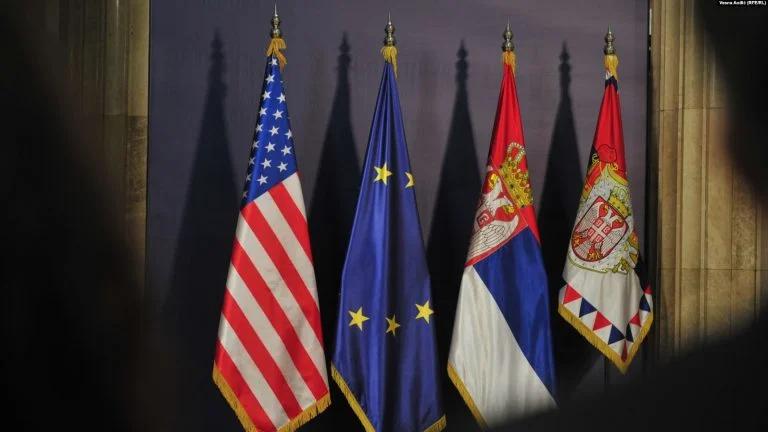
Washington deal shakes strategy for Serbian diplomacy's four pillars
Periskopi(6 years ago)
(6 years ago)Minister for European Integration of the Government of Serbia Jadranka Joksimovic has declared that Washington's agreement in Serbia will not pass as a simple episode, considering that Serbia wants to have better relations with the United States, long-term relations which “have moved [...]
The Minister for European Integration of the Government of Serbia, Jadranka Joksimovic, has stated that Washington's agreement in Serbia will not pass as a simple episode, considering that Serbia wants the United States to have as good relations as possible, relations which the long-term “have moved with the trail a step forward APUdy steps behind”.
As she has said, in a conversation with Radio Free Europe, this is good for the region as well because that agreement is not just Serbia's issue.
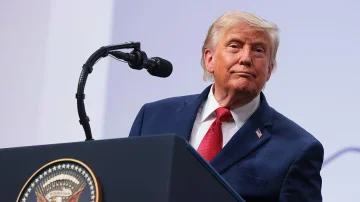
With Washington's agreement signed on September 4th, only by Serbia's president, Aleksandar Vuciq and Kosovo Prime Minister Avdullah Hoti, in the presence of US President Donald Trump, as well as with the deployment of the International Finance Corporation for Development office (DFC) in Belgrade, three weeks after, “has become a significant step towards establishing overall co-operation with the United States”, Jokov said.
She added that it would, however, contribute to further development of inclusive relations between the US and Serbia.
The opening of the DFC office in Belgrade, according to her, “speaks of what the US is very interested in for the region and Serbia, as the country's economics owner of”.
Considering the stable economic situation in Serbia, such American interest in Serbia is considered natural.
Regarding the further orientation of Serbia's foreign policy, Joksimovic stressed that there is a clearly defined direction of Serbia's foreign policy, meaning the country's European path and European integration.
It commemorates that Serbia's president, Aleksandar Vuciq, has sometimes spoken about it, saying this remains the strategic priority of the current government and the future government.
Joksimovic stressed that despite the upcoming US elections, the foreign policy of this one does not change, as she said, for tomorrow.
“Each serious state respects its signature in documents and this is the use of international law”, she stressed and added that eventually it can be discussed as to whether this agreement will be the focus of the Democrat candidate administration Joe Biden, if he wants to lead, to the extent to which the president was in focus, Donald Trump.
Official Belgrade, like President Donald Trump, who is currently in the election campaign, considers the agreement historic.
Serbia's prime minister, Anna Brnabyq, has declared this in an interview for Prva Television, a day after signing the agreement.
What doors have been opened and which haven't been closed?
After Washington's deal, however, Serbia's officials have also oriented their diplomatic activities to meetings with Chinese and Russian officials, during which they have assured them that Serbia will continue with its foreign balance policy.
“Indeed, we open the doors, we're hoping for greater strategic co-operation with the US”, said Brnabiq, and in the same sentence added that “this in no way compromises our co-operation with our partners, neither with China nor with the Russian Federation. The deal opens a pair of doors, but it doesn't close the rest”.
Is co-operation with Huawei being questioned?
Brnabic has demonstrated this even with his later meeting with Chinese Ambassador Chen Bo on the occasion of opening the Centre for Innovation and Digital Development of the Huawei company in Belgrade on September 14th.
Responding to journalists' questions about the eventual impact of several provisions of Washington's agreement on relations with Huawei, Brnabyq has said that neither Serbia is interested in unreliable technology, but in its interest is that the tender for the introduction of the 5G network is open and transparent, respecting international standards.
The ninth point of Washington's agreement, according to her, says both sides, on their mobile networks will ban the use of 5G equipment, which is sent by unverified vendors.
Brnabiq said he had even talked to representatives of the Huawei company and that both sides “absolly the same way” have understood the point of Washington's agreement.
She stressed that Serbia's president, Aleksandar Vuciq “, arrived... to keep the doors open with all partners, without bringing Serbia into an unregulated position to violate its” standards.
Serbia “Brother” with China
Serbia's president, Aleksandar Vuciq, has declared on September 30th that it is Serbia's <x0 secretari for friendship” with China and that they will succeed in maintaining brotherly and friendly relations, while Serbia, despite the pressures it will undergo “will not bring friendship with China” into question.
There are no light times behind us and they are certainly even heavier in front of us, but we must show our friendship. In the most difficult country in the world to express something positive about China (in Washington), I've said we have very good relations with China. This speaks of the power of our friendship”, Vuciq has said in waiting at the embassy of China in Belgrade, on China's citizenship day.
Vuciq had informed China's ambassador to Belgrade, Chen Bo of the talks, which the Belgrade delegation had conducted with the Pristina delegation in Washington and Brussels, says on the official website of the president of the Republic of Serbia.
He had then ordered that Serbia will continue to develop bilateral co-operation with China, as reliable partners, in all areas, including the telecommunications field.
Two days earlier, Serbian Government Office for Kosovo chief Marko Djurovic, had talked with Russian Ambassador to Belgrade Alexander Botsan-Kharchenko, as well as China's Ambassador Chen Bo.
Djuric, reportedly in the Office for Kosovo communiqué in Serbia's Government, has voiced confidence in the continuation of Aleksandar Vuciqi's friendship and ( Chinese president) Xi Jinping, meanwhile, has ordered Serbia accounts for Russia's help and is Russia's trusted friend.
Green: Agreement takes region away from Russia, China
But orders from Washington have been clear, along with insistence on the economy, there will be consequences for the foreign policy scene.
The US president's special representative for the dialogue between Kosovo and Serbia, Richard Green, for the ACLJ portal,org, five days after the signing of the Washington Agreement.
Green has said that the United States, too, has tried to make the region more pro-Western, which would take it away from Russia and China.
Serwer: Serbia's tactical movements
Daniel Serwer, professor at American University Johns Hopkins and expert on the Western Balkans, Belgrade's movements on the occasion of signing Washington's agreement, and later the statements of state officials, do not see them as signs of a return of Serbia's strategic foreign policy orientation to the US.
I found the moves towards Washington tactical. Serbia's support for the opposition of (Montenegro's president and late his ruling DPS party, Milo) Djukanovic in Montenegro, the refusal to accept Kosovo's sovereignty and territorial integrity, growing sympathy towards (Serbian member of Bosnia and Herzegovina's presidency, Milorad) Dodik and Moscow's continued proximity to military issues and Beijing, in terms of investments, seem much more like strategic movement”, Serwer stressed for Radio Free Europe.
Sekulovic: Time is running out of “polics of four pillars”
Vlatko Sekulovic, political analyst and former head of Serbia's negotiating team for the Central European Free Trade Agreement (CEFTA), tells Radio Free Europe that there is still some confusion in Serbia and that it is still not quite clear whether it will distance Belgrade from China and Russia after the Washington agreement.
According to him, the question remains open whether Serbia will change its foreign policy based on the four famous pillars (EU, US, Russia, China), which, as he commemorates, stem from the mandate of then Serbian President Boris Tadic's Democratic Party.
“The US will still remain committed to implementing Washington's agreement, and in this context Serbia will have to strengthen partnership and harmonise foreign and domestic policy with the US and the European Union, which means automatic departure from Russia and China”, Sekuvovic said.
He stressed that with Washington's agreement, all parties have accepted the obligation to use the most contemporary US technology in the field of security, which will ensure the key to Belgrade and Pristina in the top security system with the US “particularly in the cyberspace part”, where, as he says, “are erupting attacks by Chinese and Russian hackers”.
Relations with Israel (the spread of Serbia's trade representation in that country and next year also the transfer of embassy to Jerusalem) and cyber security, according to Sekulovic, will be implemented immediately, while energy diversification, which Serbia would make less dependent on Russian gas, will take a short while.
Jaxp: Making new government to reveal relationship with Russia
Foreign policy commentator Bosko Jaksic tells Radio Free Europe, which <x0-while Washington's agreement looks like tectonic change”, is early to draw the conclusion if Serbia wants to move away noticeably from support in Russia and China.
“As to the future relationship with Russia, we will know more when the new government is formed because its composition will be the mood mirror of power”, Jaksic stressed.
He believes Serbia's president, Aleksandar Vuciq “, is afraid of Russia's president, Vladimir Putin, who has not left him near (American president) Donald Trump. He will try to balance because he would be at great risk of making a sharper turn, as Montenegrin President Milo Djukanovic once made in Montenegro”, Jaksic said.
As he points out, the new government will be a “Lermusire of relations with the Kremlin, primarily in terms of whether, so far, the energy sector framework of the Socialist Party of Serbia (SPS), which is perceived as Russia's most influential channel. Jaksic, however, does not expect Vuciq to have the courage to make a sharp cut against Putin, who, as demonstrated in some other countries, as in Ukraine, can always stop Serbia from the gas from which it is completely dependent.
Serbia's citizens' more positive attitude towards US is marked
Research into public opinion regarding Serbia's relations with the US, which the Institute for European Work has made, has shown that US President Donald Trump's eventual visit to Serbia would improve relations between Belgrade and Washington, while this improvement would also contribute to resolving the Kosovo issue.
According to this research, there are more who think it's important that relations with the U.S. be good, but less are those that the United States views as a hostile country.
Research “Serbia's citizens' positions for America” was conducted in March 2020, with 1,207 interviewed.
As reported in the European Work Institute communiqué, the average rating Serbia's citizens have given relations between the two countries is 2.63, which is a slight increase compared to earlier.
More than one fifth of those interviewed (20.8 percent) consider that relations between Serbia and America would improve the resolution of the Kosovo issue.
Nearly half of those interviewed, 49 percent, consider US President Donald Trump's visit to improve the two countries' relations, while 35 percent of those interviewed estimate otherwise and 16 percent are undecided.