7 hours ago
The Serbian nurse remembers Gaddafi on the 9th anniversary of the assassination: That is why he was a rare man
Periskopi(6 years ago)
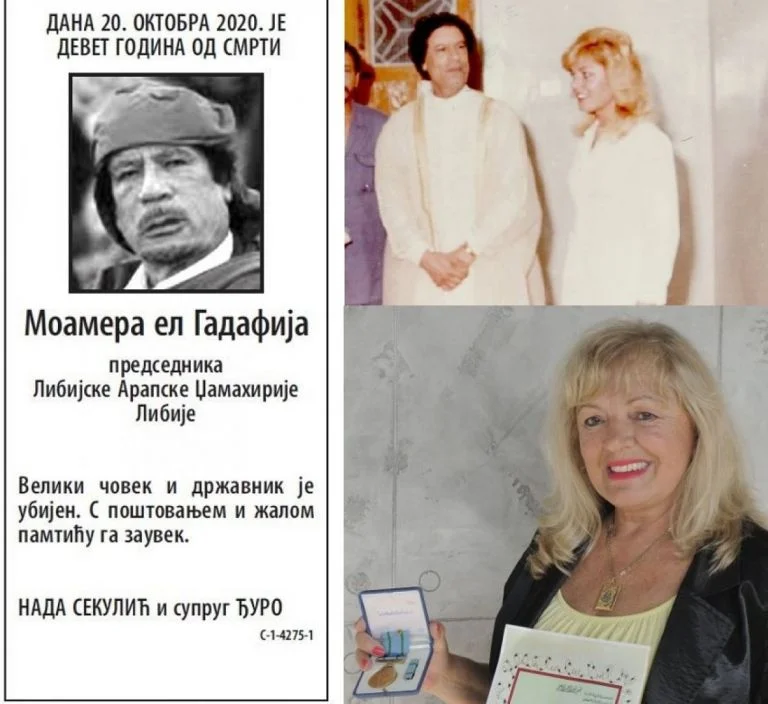
(6 years ago)Today is marked the 9th anniversary of former Libyan Freedom's death, Muammar Gaddhafi, and like every October 20th, an appreciative impression on him appeared in Novosti in Belgrade. This, as the necrology is offered each year by Nada and luro Sekulic of Belgrade, a couple who recognised Nbga near Gaddafin. Nada was once the chief nurse at the <x0 hospital Ida” [...]
Today is marked the 9th anniversary of former Libyan Freedom's death, Muammar Gaddhafi, and like every October 20th, an appreciative impression on him appeared in Novosti in Belgrade. This, as the necrology is offered each year by Nada and luro Sekulic of Belgrade, a couple who recognised Nbga near Gaddafin.
Nada was once the chief nurse at the <x0 hospital Ida” in Tripoli, where only Colonel Gaddafi, his family members, and the families of four closest associates were treated.
Novosti recalled last year's interview with Nada Sekulic, who talked about her stay in Libya.
I was part of the medical team that I was with every day. Where he was, there we were, and I was. True, doctors changed from time to time, but only the leading physician from Pakistan and I were with him constantly for two years (1985-1986).
He was a educated man, a noble warrior, sincere to a better life for his people. I fear that a man like him will never be born again in Libya, that this wonderful people will never again have such a leader,” Nada Sekulic said in the interview.
The nurse also recalled the recent meeting with the Libyan leader at the Belgrade summit of non-adherced countries.
When he came for the summit in Belgrade in 1989, only half an hour after landing at the airport, his first associate called me and told me to come with my husband as soon as possible. We were with him in less than an hour. He welcomed us with a broad smile of friendship. It was our last meeting,”, Nada Sekulic said.
We remember that the Libyan leader was executed by angry crowds during the riots accompanying the so-called Arab Spring “”. Since then, Libya has lost lasting peace, turned into a hell of internal warfare.