an hour ago
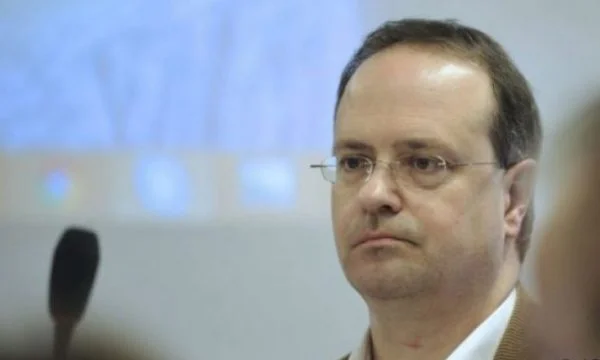
Weber analyst: Minisengen can deepen divisions in region if Kosovo does not participate
Periskopi(6 years ago)
(6 years ago)The Republic of Kosovo has ignored Rama-Raa's three-way initiative in full. Vuciq-Zaev for the evolution of the “Minidengen” project. The official Pristina has not participated in any of the meetings of this initiative, starting in Novi Sad and continuing in Ohrid and Tirana. All this stance of Kosovo institutions and the political class has come [...]
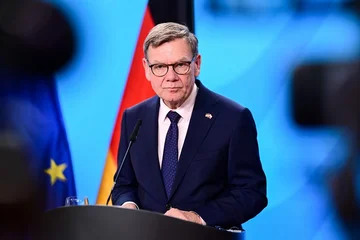
German expert and the connoisseur of political circumstances in the Western Balkans, Bodo Weber, says that if the integration of Kosovo and Bosnia is not achieved in such an initiative by exceeding existing disputes, then the divisions between states will go further deepening.
In an interview for Gazeta Express, Weber sees such an initiative as an effort by Albania and Macedonia to show a success story following the failure to open negotiations as a result of the French blockade.
It's too early to judge the initiative, because it's being fulfilled with little substance, and most of the issues are left open. While the initiative has been launched before President Macron's surprising decision to block membership negotiations for Northern Macedonia and Albania, it is clear that after such a decision, these two Western Balkan countries are in desperate need of a success framework, which is completely understandable. If the initiative will produce tangible results in the free movement of goods, services and people, which falls, there will be more substances, and it will serve less as a PR trick, then this would justify a new and long series of regional initiatives that must be taken into account. As for removing non-traditional barriers spoken at the last meeting in Tirana, it is something that could have been done, and was actually long demanded within CEFTA. On the other hand if the initiative fails to integrate Kosovo and Bosnia and Herzegovina, exceeding existing disputes (the Serbia-Kosovo status dispute, the BiH-Serbia and Montenegro dispute for migration), it could even deepen more regional divisions, rather than reduce them<1>, Webster has said, asked who would be the initiators of this project.
The weber in this interview has said the “Mersengen” project has left many questions. One of them is how Kosovo can participate in such a project based on the course of Brussels' dialogue and the fact that none of the disputes between the two states has had sustainable treatment for the fact that the status issue has remained unresolved.
German expert The DPS ignored Kosovo counters such initiative and linked it to the political situation in Pristina. According to him, such a project has come at just a time when Kosovo is awaiting the new government, and has left no other way for institutions except to reject it.
However, Weber says it would be good for Kosovo to participate, to look for reasons for all issues and thus test what is the real purpose of such initiative.
“The way in which the ill-appointed “mini-Shengeni” initiative was highlighted, leaving open most questions about the essence of the idea ʹ among them the most important question from the point of view of Kosovo, the question of how Kosovo can participate as an equal partner beside Serbia, despite the status of bilateral relations, exacerbated by the episode of exchange of territories and a historical Brussels dialogue that has proved that bilateral disputes cannot be dealt with in a sustainable way without resolving the status dispute of Kosovo, it struck in a transitional period of meeting, which made the government impossible to obtain an approach. So Pristina chose completely the opposite of non-participation. In my opinion, it could have been much more suitable for Kosovo, if Pristina were to be generally open to participation, but putting forth all unexplained questions and thus testing the waters”, the German analyst has said.