12 minutes ago
Are conditions being created to resume Kosovo-Serbia dialogue?
Periskopi(6 years ago)
(6 years ago)So why the Kosovo- Serbia has been stuck since autumn 2018, an agreement on the Pristina-Belgrade airline was signed days ago at the American Embassy in Berlin, with the initiative of the United States. This is in a sense seen as a resumption of negotiations between two countries. After the tough lobby campaign against [...]
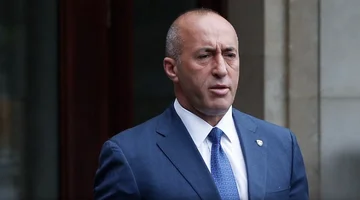
Following Kosovo's fierce lobby campaign in foreign diplomacy, held consistently by Serbia in November 2018, the Kosovo government, led by Ramush Haradinaj, taxed 100% Serbian goods. This was done in response to the actions of Serbia's criminal power, which not only denies genocide but is also lobbiing on states to attract recognition of Kosovo, and at the same time prevented our country from membership in international organisations.
Since that time, talks have been interrupted, since Serbia had declared that it did not continue dialogue until the tax remains in force.
But an American intervention prompted an agreement to be signed for the birth of Pristina-Belgrade, which is seen as a signal for the resumption of dialogue.
Analyst Rasim Alija in a statement for Kosova Prees, sees this as the possibility of restarting dialogue, but problematicly considers the issue of forming Kosovo's new government.
According to him, the establishment of institutions would solve the blockade on the issue of the Kosovo-Serbia dialogue process.
“There are signals for a possible resumption of dialogue -- Mr. Greenell's visit to Kosovo, meetings with the president of the Republic of Kosovo, and agreement reached concerning the airline -- points to positive signals of restarting dialogue. What is quite complicated and viewed as problematic is the establishment of the Government in the Republic of Kosovo. This could select a node in terms of restarting dialogue. Above all, still the political scene in Kosovo, both the Vetevendosje Movement and the Democratic League and the opposition, are unclear about their positions regarding the Kosovo-Serbia” dialogue, Alija says.
According to him, political parties in Kosovo do not have any platforms like approaching dialogue with Serbia.
“This may be quite complicated and for the course of Kosovo-Serbia dialogue itself, because it could leave the president in charge of Kosovo-Serbia dialogue, while in the country The LDK and LVV are trying to reach the coalition, Mr Thaci has already launched a dialogue-related campaign. His meetings, both meetings with Mr. Green and participation in certain conferences are seen as strengthening the president's position in terms of the Kosovo-Serbia dialogue”, he says.
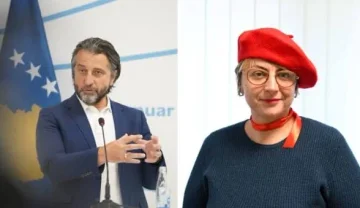
Even Eugen Cakoli from the Kosovo Democratic Institute says of Kosovo Preress, that dialogue with Serbia has virtually resumed.
“Despite statements, especially from the Serbian side that dialogue will not continue without the removal or suspension of the tax on their goods and Bosnia and Herzegovina, we have already seen virtually that dialogue has only resumed, although in terms of issues even smaller than the ambush. The American intervention in this direction, and their direct evolution in reaching agreements between the two countries is an extremely positive impulse for the dialogue process, given that if the signing of the last agreement is taken into account with the mediation of Ambassador Green in Berlin, then it is more obvious that this agreement has been negotiated by the two governments”, Calcoli says.
According to him, conditions for restarting dialogue have already been created, even though Serbia's demand remains to lift the 100% tax.
He adds that the formation of Kosovo institutions is extremely important for the Kosovo-Serbia dialogue process.
The government's “With government creation would create all the conditions for continuing dialogue, and taking into account the statements of these two political subjects, then I expect the tax to be removed once the government is established that would pave the way for action as well as continuation of the dialogue process and discussions on various issues in which the government is already only in resignations, and in other cases, the president as the only institution or constitutional mandate to hold negotiations while other institutions are not fully functional”, he says.
According to him, there is also a change in American approach to the dialogue process, which he says is aiming to introduce even the element of economic development as one of the adults that should have this process in order to ensure the success of this agreement.
While, Ariana Qosaj connoisseur of current circumstances in the country, says that without the formation of Kosovo's new government there can be no continuation of dialogue.
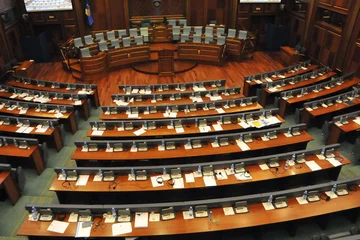
“There should be inclusion because we take an example this agreement for the airline, which actually had support from the outgoing president and prime minister, but on the other hand this is not an agreement which should be voted in the Assembly necessarily, even though it speaks of airspace. But on the other side of the agreement with Serbia, which should be long-term, there should be inclusion, because it should have at least two-thirds of the vote in the Assembly, and without that inclusion we cannot move forward.
Days earlier, Kosovo President Hashim Thaci announced that he had talked with the high representative for foreign policy and security of the European Union, Josep Borrell, with whom he said they have agreed about the need to continue the unconditional dialogue between Kosovo and Serbia, and the achievement of the final agreement meaning mutual recognition.
While during this week in Pristina and Belgrade, special representative of the United States for Kosovo-Serbia dialogue, Ambassador Richard Green has remained.
Grenelli has declared that Serbia must stop the vicious campaign against Kosovo independence, and Kosovo must lift the tax.