2 hours ago
Unnatural coalitions for survival and political power

Periskopi(7 years ago)
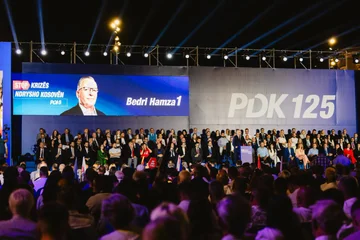
(7 years ago)Political parties in Kosovo have already started discussions and reviewing possible coalition opportunities for early parliamentary elections in Kosovo, the date of maintaining which has not been scheduled by the country's president, following the distribution of the Kosovo Assembly on August 22nd. Before and after the distribution of the Assembly, they were created [...]
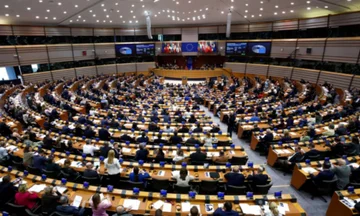
Political parties in Kosovo have already started discussions and reviewing possible coalition opportunities for early parliamentary elections in Kosovo, the date of maintaining which has not been scheduled by the country's president, following the distribution of the Kosovo Assembly on August 22nd.
Before and after the distribution of the Parliament, two coalitions have been established among political parties, and the review of other possible coalitions is continuing. But, so far as practices have shown that political parties' coalitions, as in the past, continue to be unnatural, assess connoisseurs of political developments in Kosovo.
According to them, until-the-art practices have shown that none of the political parties in the country have managed as solely to win the majority of votes to create the parliamentary majority and therefore the government.
As they say, political parties, considered the biggest in the country's political life, aim to compete alone, emerge as the first most voted party and then establish post-election coalitions to achieve the necessary majority for the government's creation.
Meanwhile, smaller parties, as they say, have already established coalitions to ensure the possibility of being introduced into the Assembly, as well as to be part of possible estimates after the elections, to be part of the next government.
Run parties for pre-election coalitions
Artan Murati, from the Kosovo Democratic Institute, tells Radio Free Europe that so-called practices have shown that pre-election coalitions in Kosovo, mainly for political survival.
According to him, the race through the coalition came as a result of the Constitutional Court's decision in 2014, which had given him the right to form institutions, the pre-election coalition by the most votes.
The “Normically that this is largely leading up to, especially since 2014, and that famous Constitutional Court act, which has somehow lost its right to political life in Kosovo. The fact that the interpretation of coalitions has come as pre-election coalitions is now pushing political subjects to create coalitions for the sake of a tendency to win elections, and therefore, even having the opportunity to dominate candidates or have mandated to form institutions, Murati stressed.
Arton Demhasey, director of the non-governmental organisation “Arise”, speaking of Radio Free Europe, estimates that none of their political parties or coalitions are meant to win elections, but are aiming to come up as the first with the most votes and then to take smaller parties or coalitions of smaller parties, to create the government.
So far, we've never seen any natural coalition, whether it's related to the ideology that political parties have or even to the approach of their programmes that can be close and that they get together. We didn't have any such coalitions. All coalitions have been built only to concentrate a portion of the vote, so that they can get the best of the elections and get as many MPs as possible. So we have no principled coalitions, no coalitions based on programmes, and we also don't have coalitions based on the ideology that political parties have. This shows that no principle of parliamentarians is respected”, Demhaja said.
He has added that already for future early elections, Unnatural coalitions have been created between left and right and centre parties.
Set up “counterants”
On 19 August, the right-wing Alliance for the Future of Kosovo, whose leader is Ramush Haradinaj, has linked the coalition with the left-oriented Social Democrats, which Shpend Ahmeti leads. For more, there has not rarely been a clash between these two parties.
But on the day of the coalition's arrival, Ahmeti has stressed that earlier statements should be left behind.
I think it's been a long time since those statements. I think we've matured more as political subjects and we've continued to discuss it. Of course, there are also points where we disagree, but that ultimately do not relate to those statements”, Ahmeti said.
New Elections With Old Challenges
On August 22nd, the pre-election coalition has also linked the centre-right party -- the New Kosovo Alliance and Behgjet Pacolli -- and the left-wing political subject, Fatmir Limaj's Social Democrat Initiative.
Alliance leader Kosova e Re Pacolli has not deemed this coalition unnatural.
I would call it the gold center, the middle axis or I'm calling it, the third political part, which would be of the key importance for forming the next government”, Pacolli said.
The two main opposition parties, the Democratic League of Kosovo, which has right orientation and the Vetevendosje Movement -- totally left-oriented -- have marked approach, as never before noted. However, the LDK has declared it will approach elections as the only party.
Democratic Party of Kosovo, The right orientation, so far, has not put on a red line for possible coalitions.
Coalition trend
Analyst Murati says he is already on the trend of new coalitions, for the upcoming elections.
The “The coalitions that have been made and the ones that are now going on is not that they have something in common in the programming aspects. If we look at them in terms of programs, there is discrimination in matters of education, health issues, and more or less in all. It's not like program issues are being taken into account right now. However, until they dominate the political discourse on the issue of the agreement with Serbia, dialogue and so on, these fall into second plan and the idea is to draw up attitudes about issues related to topics that are being discussed and trumpeted on the political scene in Kosovo”, Murati said.
With what promises will political parties target citizens' votes?
The connection of coalitions or the alignment of positions among parties that have had earlier clashes, as analyst Demhasaj says, are similar to situations that have existed before the previous elections in the country.
We have seen the controversy between the PSD and the AAK, but now they're together in the coalition. The objections that have been between the LDK and the Vetevendosje Movement are untold, but now it is the tendency to form a coalition. It means, no coalition that has been reached so far or those intended to be achieved, at least publicly mentioned, is based on certain principles, their programmes or their ideologies, but are simply political calculations and vote calculations. There's nothing here natural, but there's only intention of coming to power”, Demhaya praised.
However, Kosovo President Hashim Thaci, after the distribution of Kosovo's draft, has stressed that in the following days he will set the date when early parliamentary elections will be held in the country.