4 hours ago
spokesman NATO: Agreement with Serbia must include recognition of Kosovo as independent state

Periskopi(7 years ago)
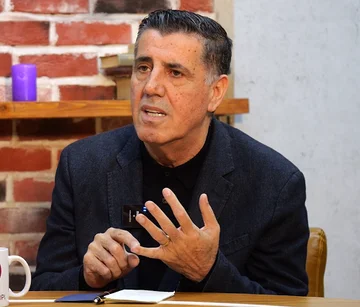
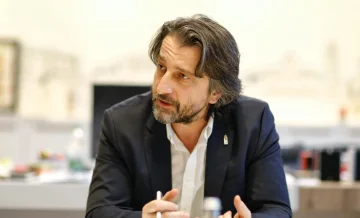
(7 years ago)Jamie Shea, spokesperson for NATO during the spring 1999 air campaign, on the 20th anniversary of the end of the war, recalls the trials the Alliance had been through at the time and speaks of the results of this campaign in preventing ethnic cleansing of Kosovo Albanians. He is shocked to see that [...]
He is shocked to see that even two decades after Serbia presents itself victimised and does not accept any responsibility for crimes committed in Kosovo.
This year marks the 20th anniversary of NATO's air campaign against the Serb Army targets, which brought the end of the war and the deployment of NATO troops to Kosovo. How do you view events in the spring of 1999 from that perspective?
Shea: Twenty years after the NATO-led air campaign, I still consider it completely legitimate and reasonable. Milosevic's regime in Serbia had led a brutal campaign against the people of Kosovo, committing multiple human rights violations. Similarly, he has rejected a peaceful and negotiated agreement that the Kosovo delegation had accepted. Therefore, NATO member states had no choice but to use force to stop the suffering of Kosovo's civilian population. For this move we have had the support of the public, parliaments and the wider international community, as it was proportional and clear action in achieving goals. No one wanted a repeat of what happened in Bosnia from 1992 to 1995, when the international community was very slow in taking decisive action.
NATO's air campaign has been the largest military intervention in Europe since World War II. How difficult has it been to convince NATO member states to participate in this campaign and remain united during the 78-day bombing campaign?
Shea: No one wants to use force if it can be avoided. For this reason NATO allies tried hard for six months in Rambouille and Paris to negotiate a peaceful agreement between the Milosevic regime and Kosovo representatives. NATO has also, at times, publicly and clearly warned Milosevic of giving up the military and depression campaign in Kosovo. So when the decision was made in March 1999 for force use, the Allieds were united as they were all pleased that the air campaign was indeed the last and justifiable tool as the only way to stop the ethnic cleansing Milosevic was making to Kosovo. After the air campaign began, the violent massive deportation of Kosovo's population and many violent depression cases only made NATO allies even more determined that the air campaign would end successfully.
The act established by the UN against Milosevic for war crimes only reinforced our conviction that we were doing the right thing. It is NATO's value that makes decisions by consensus after consultations and planning in which all Allies share and hear the voice of all the Allies. So when the Alliance takes action it remains united, because all Allies are heeders in their collective action. This confirms the fact that NATO forces have remained in Kosovo to ensure stability in the past 20 years.
As a member of NATO personnel at the time, now as a university professor do you think the intervention of Has NATO become a little late to prevent mass persecution and the killing of over 13,500 people?
Shea: That's a fair question and it's clear that any death of innocent civilians is for mourning. But compared to 100,000 murders in the Bosnian conflict, the victims in Kosovo were about one tenth of that number. This showed that the international community had received instruction from Bosnia when it comes to faster and more decisive taking of action. Also, many killings occurred after the start of NATO's air campaign when Milosevic's forces accelerated their violent actions against the civilian population. After this was said, I am convinced that unless NATO intervenes in Kosovo, the situation on the ground would progressively deteriorate, and the murder rate would be multiple. If you see Syria now, with over half a million killed and some 15 million displaced and unsurpassed people, you can see that the consequences of non-intervention are much worse than when the international community makes serious efforts to end the wars. Another very important thing is that NATO's campaign made it possible to return almost immediately to homes of hundreds of thousands of refugees from Kosovo. This was nowhere else in the former Yugoslavia, nor in many other conflicts worldwide.
Let's get back to actual developments. Do you think a comprehensive agreement is possible between Kosovo and Serbia as two independent states?
Shea: But it is possible, but it requires the continued commitment of the United States and Europeans to push Pristina and Belgrade towards an agreement. I hope that civil society in both Serbia and Kosovo will overcome divisions and work for greater understanding and reconciliation. Understanding history objectively is also ironic. When I was reading Serbia's media on the 20th anniversary of NATO's air campaign, I was shocked by the sense of victimisation and exclusion of any responsibility for what happened in Kosovo in 1998-1999. The 20th anniversary should be an opportunity to look to the future rather than the past. It is clear that, above all, an agreement is needed between Pristina and Belgrade that must certainly include recognising Kosovo as an independent state. This should be a necessary element of the European perspective for Kosovo and Serbia, which at the same time promotes the Euro-Atlantic integration of the entire Western Balkans,
Do you think that in the near future the Western Balkan states will become members of the NATO alliance?
Shea: I think so. It's not gonna happen as soon as I want, but it's gonna happen. The examples of Montenegro and northern Macedonia show that NATO's door is open. The exception constitutes Serbia, which currently does not seek NATO membership, but is negotiating EU entry. So it's on its way to becoming a real European country and it's cooperating with the Alliance in many joint exercises and training classes. And in the long run, never to be said!
Jamie Shea at the time of the 1999 78-day air campaign against the Serb Army targets has been the spokesperson for the North Atlantic Alliance (NATO). He has later held important positions within NATO as deputy secretary-general for foreign relations, public diplomacy and then, even for the New Security Challenges to retirement.
Shea has legalised international relations, defence issues and European studies at several British, European and American universities.