an hour ago
British journalist recording attacks on the Jashar family: The phone saved me from the bullet.

Periskopi(7 years ago)
(7 years ago)Photographs taken by English journalist Vaughan Smith were the first significant matches of a new Kosovo war. They displayed several people who poured bottles of gasoline to set their houses on fire. This was the first evidence that Serbs had launched a major campaign against Kosovo. During the months of war, no cameraman [...]
Photographs taken by English journalist Vaughan Smith were the first significant matches of a new Kosovo war. They displayed several people who poured bottles of gasoline to set their houses on fire.
This was the first evidence that Serbs had launched a major campaign against Kosovo.
During the months of war, no cameraman managed to get near the Serb war vehicles as they destroyed homes, but English journalist Vaughan Smith did so.
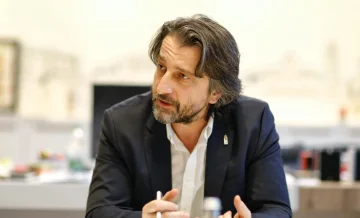
On show “After Didite” at RTV Dukagjini he has confessed some of the events that later changed Kosovo's history. Smith says about 140 local and foreign journalists have lost their lives in Kosovo.
The price journalists paid for reporting what was happening was expensive. I almost got killed in Prekaz when the bullet hit my phone. That phone saved my life. I'm grateful for the journalists who reported”, he relates.
The English reporter reports that after serving in the British Army, he had begun his work as a free photographer and their photos and videos were sold to known agencies.
This profession today is common, but at the time it was not the same”.
Smith says that among the first videos he made in Licoshan and Prekaz were the sights when Serbian bodozers were ruining the homes of Albanians.
He says the same were used in Srebrenica.
After Likoshan, we realised that Serbian forces were developing greater action. We went up the mountain and saw smoke coming out of Prekazi. We saw the bulldozers tear down the houses in Prekaz... As soon as the Serb forces saw us, they fired at us. We lay on the ground and somehow drove to the car. When I pulled out my phone he wasn't. I saw he had a bullet and so I had saved”
He says he was afraid of being a journalist in such an area, but says such experiences had also occurred in Bosnia.
It was very important that the international community knew what was happening. I didn't have any political intentions”.
The journalist says there were many difficult moments, but among the worst that remained in his mind was the massacre in Obria.
I saw the bodies of those killed. Most of them were women and children”.
Smith says the KLA at the time seemed suspicious as its members carried masks and people behind those masks could be criminals.
He says the first person without a mask who had interviewed him as a foreign journalist carried the nickname “ ”.
When I went to interview him, he took off his mask and told me that “I'm tired with my mask”. Behind the mask, he hid a face wearing a whisker”.
British journalist relates that during his field work, Serbs would often stop them and put bombs in their pockets.
The Serbs put bombs in our pockets and they told us to take off the fuse. Of course they made fun of us, but it was a tremendous pressure”.
Smith is married to an Albanian woman and relates how he met her.
The spring came to the Grand Hotel and told me there was a story about The KLA could offer me access to the KLA. It was very attractive and quite loving... it sent me to the KLA and it started off... ”, Vaughan Smith related.