3 hours ago
Serbian journalist raises three fingers in front of Edi Rama, that's his reaction

Periskopi(7 years ago)
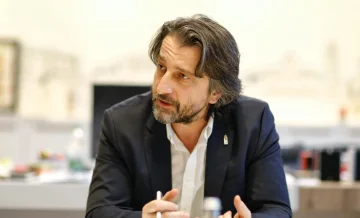
(7 years ago)In an interview conducted with the Serbian television station “Pink Tv”, the Serbian journalist has been as protagonist as Albanian Prime Minister Edi Rama, right in his office at the government building. The latter has spoken openly about the relationship between Kosovo and Serbia, preaching dialogue and peace, as well as seeking extinction [...]
The latter has spoken openly about the relationship between Kosovo and Serbia, preaching dialogue and peace, as well as seeking the disappearance of border lines in the Balkan region.
But another detail reflected in the Serbian media was the three-finger gesture that the journalist tells Albania's prime minister.
Journalist Ksenija Vuciq himself says it was not an intentional gesture, but it was an illustration following the question Eddy Rama had asked about the eagle's symbol. This symbol became the subject of debate in Belgrade recently, when the cousin of an Albanian baker in Serbia posted it on social networks and then erased it, broadcasts the Shqip newspaper.
It was enough to have Serbian ultranationalist protesters gathered for several days before the baker's oven. Rama put this opportunity to show that an eagle's symbol is not provocation. The journalist returned to him, claiming that neither is the symbol with the three fingers raised.
“If I go through Tirana with three fingers up, how sure am I?”, she asked.
The Albanian prime minister replied that nothing would happen, but even if he was threatened, he joked that he would come out on his own to protect him.
The Story of the Three Fingers
A version of the interpretation of this symbol, according to Serbs, is the sacred Trinity. But such an explanation seems somewhat mythologyic, as this symbol has gained popularity among Serbs only during the Balkan wars.
The first popular use of the three-point greeting was in 1988, when Serbs used to oppose Albanians, Croats and Slovenians. The three-finger gesture is an exclusive Serbian symbol, which in recent years has taken on strong nationalist overtones after being used en masse by Serb paramilitary forces in war, initially against Muslims.
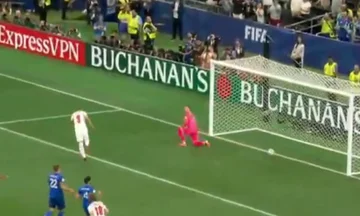
Today, the greeting is used by members and supporters of almost all Serbian political parties at their gatherings during election campaigns. It can be seen in all types of street demonstrations and celebrations. The greeting has often been used by fans and players when celebrating their victories.
Historian Dragan Petrovic points out that the politician known as nationalist Vuk Draskovic was not “author” of the greeting.
Vuk Draskovic, leader of the political party Movement for Serbian Renewal, has indicated that he was the first to bring this greeting in 1990 to the party's founding meeting, inspired by Paja Jovanovic's painting.
A popular theory on the origin of welcome is based on how Orthodox Serbs have carried out the sign of the cross, with three long fingers representing the Trinity. Some explanations link the shape of the fingers and the number 6, which repeats itself three times.