21 minutes ago
Reactions between Belgrade against low punishments against war criminals

Periskopi(7 years ago)
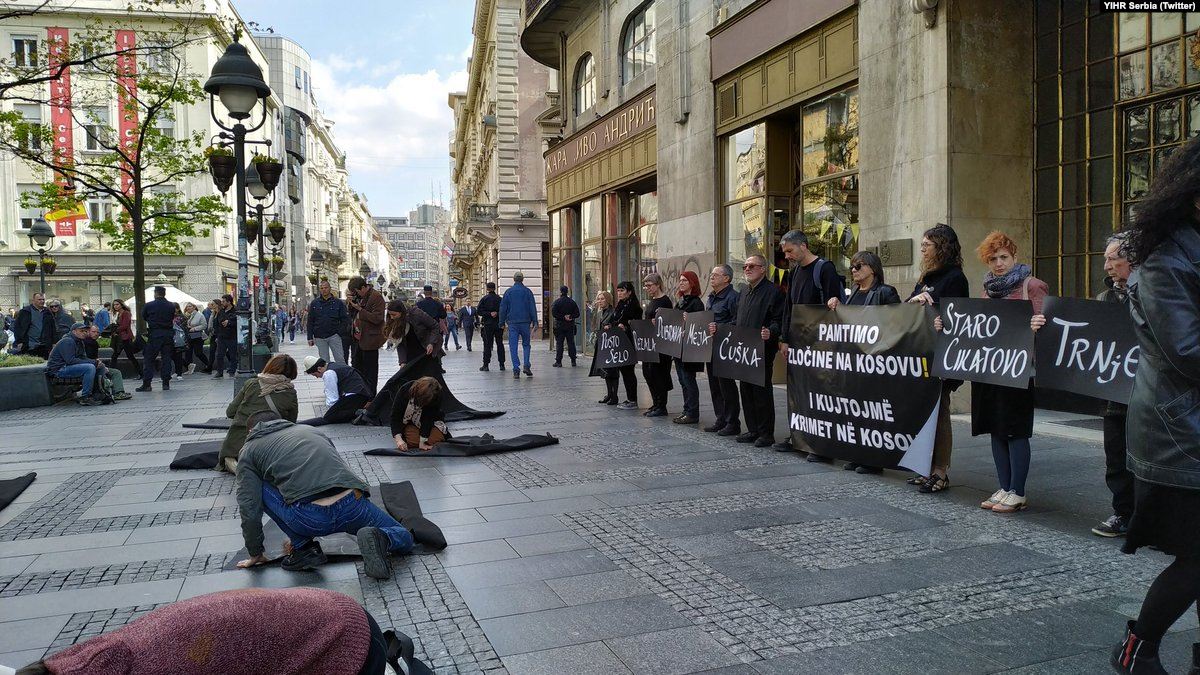
(7 years ago)In Belgrade, nongovernmental organisations, the Youth Initiative for Human Rights, the Fund for Humanitarian Law and Women in Black marked on Wednesday 20 years of crimes against Kosovo Albanians with a downtown event. Representatives of these organisations said the event is “a outcry against forgetting and silence [...]
Representatives of these organisations said the event is “a shout against the forgetfulness and silence of the crimes of the Serbian Armed Forces” and call on citizens to co-feel and solidify.
Kosovo emerged from the war, which ended with NATO intervention 20 years ago, with more than 10,000 killed and thousands missing. Still, nothing is known about the fate of a thousand and 600 people, most of whom are of Albanian national affiliation.
Last week, the Kosovo government launched the initiative to draft a law under which all those who deny war crimes in Kosovo will be punished.
Within two weeks Kosovo Deputy Prime Minister Ramush Haradinaj fired Minister of Local Power in his government Ivan Teodosijevic and Deputy Justice Minister Vesna Mikic after denying Serbia's crimes during the 1998 and 1999 war, while accusing Albanians of being <x0-terrorist” and of “exacting massacre” to promote NATO bombings against Serb forces.
Belgrade named the dismissals as violations of freedom of speech and pressure on members of the Serb community and reaffirmed denial of crimes committed by Serb forces in Kosovo.
Kosovo is marking the 20th anniversary of NATO bombings on Serbian forces, and almost every day marks one of the dates of atrocities committed by Serbian forces.
But until Kosovo institutions assess NATO intervention of crucial importance to the country's history. Serbian officials name Serbia <x0viktim of NATO aggression”.
Against denial of crimes, Western diplomats in Kosovo have also indicated.
The American Embassy said earlier this week that <x0mim of atrocities, insults memory of victims, traumatizes families, and undermines progress in building democratic and multiethnic state”. Dedicated to truth about the past, said in response, “is essential for peaceful future”.
On Thursday and British Ambassador Ruair O'Connell reacted against denial of crimes, stressing that “if we want to have peace and progress, we need to speak the truth”. /Vosa/