2 hours ago
What should Kosovo learn from the EU decision on Albania and Macedonia?

Periskopi(7 years ago)
(7 years ago)Failure to reach consensus in the European Union for launching negotiations with Albania and Northern Macedonia will not have to increase pessimism in Kosovo, no matter how long it is in the EU integration process, say European professors and analysts. European Union at meetings that took place [...]
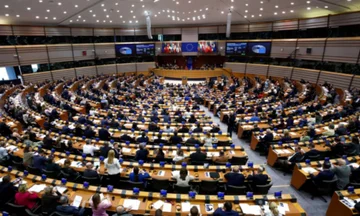
The European Union at meetings that took place this week failed to make a positive decision on opening accession talks with northern Macedonia and Albania.
As for Kosovo, which has not yet received candidate status, the EU has a number of specific requirements, among which it prevails for advancing dialogue with Serbia, but also a constant demand for advancing rule of rule and law.
But the biggest obstacle remains that of Kosovo's non-recognition by the five EU member states.
Emrush Ujkan, professor of European Law at the University of Pristina, told Radio Free Europe that the European Union, before moving forward in the membership of new countries or even opening negotiations, should be true if it wants the Western Balkans in its own family.
He adds that the EU's position towards northern Macedonia and Albania could more be called non-unification of positions within EU states.
Kosovo is tasked with continuing to work on reforms required by the EU, but that even if Kosovo were more advanced at the current moment when we realize that five countries continue not to recognise Kosovo as a state, it would have been extremely difficult”.
When a state like France emerged to be a major obstacle and negotiations for Albania and Macedonia were not opened, and it is not that France opposes the legal subjectivity of these two states, in the case of Kosovo not only will there be reactions, but it should be taken into account that the five countries do not recognise Kosovo's judicial subjectivity, therefore it will be difficult”, Wolfan says.
Do not open negotiations for Albania and Macedonia raised major concerns. The EU's non-positive decision was stressed that they would not be a good example for Kosovo and Bosnia in integration processes.
“If they condemn the best example (North Macedonian) how will Vucicin motivate, how they motivate Thaci, or how they will motivate Bosnia. In our region, interests have Turkey, Russia, China, but they do not offer rule of law and democracy. We have seen this, so we want democracy”, North Macedonia Prime Minister Zoran Zaev has said.
In 2018 the agreement between northern Macedonia and Greece was signed, closing the dispute of more than two decades between the two neighbouring countries on the name issue with which the state was appointed.
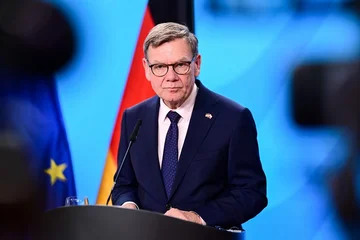
European Union Enlargement Commissioner Johannes Hahn warned EU member states that the lack of a positive decision to open membership negotiations with Albania and Northern Macedonia will affect the situation in the region, especially in the process of normalising relations between Kosovo and Serbia.
“If North Macedonia is not adequately rewarded, there will be no reason for Serbia and Kosovo to enter into a meaningful dialogue for their future co-existence, because the only way to do so is European perspective”, Hahn has said.
Demush Shasha of the Kosovo Institute for European Policy (EPIK) tells Radio Free Europe that within EU countries, a discurs about better integration among EU member states are being seen before any further steps towards enlargement.
This discurs, according to Shasha, is appropriate, since it will help the countries of the Western Balkans.
He says the perception was wrong that with the Prespa Agreement between Skopje and Athens, Northern Macedonia wins membership negotiations with the EU, in this respect Shasha says Kosovo should not expect to reach an eventual agreement with Serbia, to benefit from the EU membership process.
“Shouldn't be seen optics that now the Prespa agreement is not rewarded with opening negotiations, and therefore what to waste time we too waste to make a deal with Serbia, we get nothing, that view is wrong. The Prespa Agreement has been a goal in itself, and the citizens of Macedonia and the citizens of Greece are better today than before the agreement. The same citizens of Kosovo and Serbia should see as the goal of good neighbourly policy between the two neighbouring countries”, he says.
Kosovo agreement ? Serbia
However, Demush Shasha believes that reaching the Kosovo agreement -- Serbia and advancing rule of law and rule -- will bring Kosovo to a more advanced status with the EU, respectively, towards candidate status.
On the other hand, Professor Emrush Ujkan says the agreement with Serbia will be necessary for Kosovo to advance in the integration process.
The next “government must have it clear that more work needs to be done in the integration processes, even though the focus will be on what is the final achievement of the Kosovo agreement Serbia”, says Wjkan.
The European Union's latest report on Kosovo expressed concern about the impact of policy on the justice system, the high level of corruption spreading, the informal economy, and the impasse on election reform.
In most of these areas, little progress was highlighted. While many of the recommendations, for each of the responsible institutions, remain unadvised.
Professor Emrush Ujkan says that even in next year's report, no major change can be expected and that the remarks will be the same.
“There has been some slight improvement, but they are very minority things in relation to what the country should do. What will be highlighted this year in the EU report, I believe it will be the elections that have passed into a good process, but this is only a good assessment, but in other aspects of Kosovo in the last two years has not made great progress, but that maybe in the future there will be a greater commitment”, Wolfan says.
Kosovo is the last in the integration process. So far Kosovo with the European Union has signed a Stabilisation and Association Agreement, which is the first and only contractual agreement.
Kosovo citizens are the only citizens in the Western Balkans where, despite numerous promises by political leaders in the country, do not have visa liberalisation.