19 minutes ago
Merkel, Stoltenberg and Kurz visit Skopje this week

Periskopi(8 years ago)
(8 years ago)The European Union is intensifying Macedonia's support activities for the September 30th referendum on the Agreement with Greece, envisioning the resolution of the name dispute. This agreement unblocks Macedonia's NATO membership process and the European Union, as with the resolution of the name issue, Greece will no longer decide veto Macedonia for [...]
With this agreement unblocked Macedonia's membership process in NATO and the European Union, as with the resolution of the name issue, Greece will no longer impose veto Macedonia for integration into these two organisations.
General Secretary-General is expected to arrive in Skopje on Wednesday evening NATO, Jens Stoltenberg, on Friday Austrian Chancellor Sebastian Kurz, while on Saturday, German Chancellor Angela Merkel, whose visit is praised as historic for Macedonia's authorities.
The arrival of three world leaders is gratitude for Macedonia, a positive signal. They are stretching out our hand to move forward”, Macedonia's prime minister, Zoran Zaev, has declared commenting on the visits of senior European representatives.
According to him, even the opposition should be aware that now is the moment for the EU and NATO, the moment when, according to him, “we should all be united to achieve the goal for the country's integration into Euro-Atlantic structures”.
Germany is considered one of the states that has mostly supported resolving name dispute with Greece, as well as Macedonia's NATO and EU membership process.
Stephen Seibert, spokesman for the German Chancellor, has said that in the focus of Angela Merkel's visit will be “regional developments and bilateral issues” and that German Chancellor “wants to personally create the impression, on alert of the name issue to be held at the end of the month”.
The NATO Secretary General's visit is second this year. Jens Stoltenberg is expected to reconfirm the Alliance's support for Macedonia to become its 30th state, but for that to be done, the Alliance's leader will demand that the referendum succeed.
“You cannot be a NATO member without resolving the name issue. This is for the people of Macedonia to decide (in the referendum) ...We have said that they will start the talks, but that you must apply all obligations from the agreement with Greece, and then the IRJM will become a 30th NATO member, named Republic of Northern Macedonia<1>, Stoltenberg has declared.
Support for the referendum, Macedonia has also received from Austria, which currently leads with the European Union. While widely recognised as supporter of the policies of the former prime minister's government, Nikola Gruevski, now Austrian Chancellor Sebastian Kurz has clearly indicated that he supports the Prespa Agreement, while during the recent visit to Vienna of the current prime minister, Zoran Zaev has said the “agreement represents a crucial step in Macedonia's accession process to the European Union”.
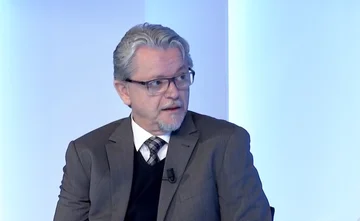
Denko Maleski, professor at Skopje University and former foreign affairs minister, says Western interest in referendum success and the country's approach towards NATO and the EU have two factors to do with. First, it has to do with what “of history, which needs to be exploited”, which according to him relates to the interests of Western countries for the reduction of Russian influence in the Balkans.
This is very important to keep in mind because earlier there was no such great concern of the US and the European Union for NATO enlargement with Macedonia and other Balkan states”, Maleski says.
While as the second factor for their growing interest in Macedonia, he sees the country's inability now 30 years to resolve the dispute with Greece, so their commitment, according to Maleski, is in the direction of closing this problem that has blocked even Euro-Atlantic integration.
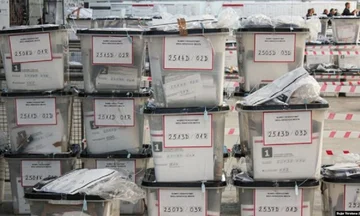
The European leaders' visit comes at the moment when parties in Macedonia have intensified the campaign for the 30 September referendum. The ruling parties, but several other extra-parliamentary parties are developing activities to convince citizens that “support for the Agreement with Greece and the success of the referendum are the only possibility for the country's European future”. The opposition, on the other hand, opposes the Agreement with Greece, calling it a <x2-captive for the country, the Macedonian language, identity and culture”, but it has so far not come up with the stance whether to boycott the referendum or invite citizens to vote against it.
In addition to European Union officials, Macedonia has also been visited by senior US administration representatives, as was the visit of US Deputy Assistant Secretary of State for Europe and Euro-Azi Matthew Palmer.
It is clear that the referendum will be an important date that will enable citizens to be declared. We hope that citizens will come out and be declared according to their will, without pressure and deninforms”, had declared the US diplomat. / REL