12 minutes ago
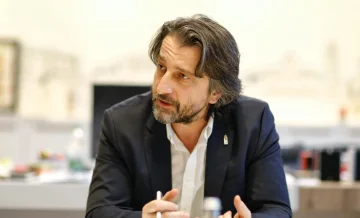
Adem Demaschi after being released from prison: I'm against revenge. I love Albanians.

Periskopi(8 years ago)
(8 years ago)I can go to jail. I can die not because I love Serbs and Montenegrins more, but because I love Albanians very much. I am against the idea of revenge, because I have enough to settle, but I don't want to solve it. I want to turn my back on revenge”, Adam Demach had said after release [...]
I can go to jail. I can die not because I love Serbs and Montenegrins more, but because I love Albanians very much. I am against the idea of revenge, because I have enough to settle, but I don't want to solve it. I want to turn my back on revenge”, Adam Demach said after being released from prison.
Demach spent 28 years in various prisons in the former Yugoslavia for his passionate Avokim for the rights of Kosovo Albanians, later becoming a symbol of the national war of independence, despite his becoming a sworn opponent of the revenge policy and national hatred.
Adem Demach was born in August 1935 in Pristina, in the Serbian-Croatian-Slovenian Kingdom. As a result of difficult living conditions and lack of health care, only three of the family's seven children survived. Not knowing whether Adam would survive, his parents did not record his birth until February 26, 1936, six months later.
Demach started elementary school in Pristina during the Italian occupation from 1941 to 1943, continued under German rule in 1944 and completed it in 1946, in communist Yugoslavia. In Pristina, from 1946 to 1953, he finished secondary school.
As a high school student at the age of 17, Demaci published some of his stories in the newspaper Rivel and New Life magazines and Youth Bureau. When Demach finished high school, he enrolled in World Literature at the University of Belgrade. But at the end of his fifth semester, Demach's mother became seriously ill. He was forced to stop his studies and return to Pristina. There he began his work as an editor in the newspaper Renaissance.
From 1953 to 1958, Demach confirmed his reputation as a writer of short stories. “Return”, one of the most well-known stories of the time, denounced the expulsion of Kosovo Albanians to Turkey.
In the first half of 1958, Demach published his first novel, “Bloodmen”, which was the first Albanian-language novel published in Kosovo. In it, Demaci attacked the tradition of blood feuding, summing up his ideas at dedication, “not those who are brave enough to take a finger on crime, but those who courageously offer the hand of reconciliation”.
Although he was not a member of any illegal organisation, on November 19, 1958, Demac was arrested for <x0 ... hostile propaganda against the regime of the Federal People's Republic of Yugoslavia”.
After his arrest, the distribution of his novel was banned. Years later, the book “Blood Snakes of Blood” began to circulate between students and activists in illegal movements, often wearing the cover of novel “The Bridge on Drin”, by famous Yugoslav author Ivo Andric.
While in custody, Demac told investigative authorities that his group of friends had agreed on the need to form an illegal organisation, but said the creation of such an organisation had been hampered by his arrest. He acknowledged that the organisation's main goal would be to prevent the violent expulsion of Albanians to Turkey, the ban on the campaign to collect people's weapons, and the imprisonment and condemnation of a host of student groups.
On March 17th 1959, Demach was convicted by the District Court in Pristina and sentenced to five years in severe prison. On June 9th 1959, the Supreme Court of Serbia reduced the sentence to three years.
A few days later, Demaci was closed in Belgrade's central prison and, hours later, was sent to the Sremska Mitrovica prison in Vojvodina, built during the Austro-Hungarian Empire, where he would pass the rest of his sentence. Demach was assigned to work on the production of heavy automobile gangs. Later, he was sent to work in the kitchen.
Two years after his release on November 28, 1963, Demach with a group of friends established an illegal organisation, the Revolutionary Movement for the Union of Albanians, LRBS.
Its goal was “ensuring the right to self-rule, even to the point of complete secession, for majority Albanian areas that were within Yugoslav administration”. To achieve this, the LRBS said it would use all available resources and resources, from politics and propaganda to armed warfare and widespread popular resistance”.
Members of LRBS on 12 April 1964 waved 99 Albanian flags on major streets of Kosovo cities. In each city where the move was carried out, activists also wrote the slogan on the walls, “Roft Albania, our mother”.
On June 8, 1964, two months after the flag action, more than 300 LRBS members were arrested. After a trial held in Pristina, from 27 August to 31 August 1964, Demac was imprisoned for 15 years. About 100 other activists were imprisoned for four to 13 years. About 200 other members were released after several months.
Demach spent four and a half months of his sentence in the Nis prison. He was then sent to the Pozarevac prison in Zabel, where he spent almost a year in solitary confinement, in a cell full of tartabiq (insekte), with which he gradually began to associate. Besides sharing his cell with common criminals and enduring prolonged isolation, Demacci also had to do hard work. At first, he was assigned to a group that made models for melting a number of metal tablets and later to a group for the assembly of oil drills.
Besides being imprisoned for his attempt to publish an opposition newspaper and director of Serbian cinema Lazar Stojanovic, jailed for President Tito's mockery in his film, Jesus Christ of plastic.
In September 1969, in the Pozarevac Prison, Demach wrote a show entitled "Poppuʹ, a word he created by combining words, politics, and rifles. A friend pulled his manuscript out of prison. In this drama, Demach described the Albanian wars in the Serbian-Croatian-Slovenian Kingdom in the first quarter of the last century. It was his only chance to write all his 28 years in prison.
Demac has credited LRBS for helping overthrow Yugoslavia's Serbian deputy leader, Aleksandar Rankovic, in 1966 and for adopting the legal changes that gave Albanian language the status of an official language in Kosovo along with the Serbian language. Kosovo Albanians were also allowed to wave the Albanian flag. About this time, the sentences of ethnic Albanian political prisoners were reviewed, and Demac's own sentence was reduced from 15 to 10 years.
On November 27, 1968, protests were held in a number of cities in Kosovo, demanding that Kosovo become a fully independent Yugoslav Republic instead of a province.
On 21 February 1974, Yugoslavia's new constitution gave Kosovo and Vojvodina, of the two autonomous provinces of the Republic of Serbia, an almost same status as that of the six Yugoslav republics. Three and a half months after adopting the new constitution on June 8, 1974, Demac was released from prison for the second time.
In the past ten years in his second sentence, Demaci realised he had wrongly believed that the Albanian national union could be achieved with the help of one of the two main powers of the communist world, China and Russia.
Initially he had thought that the unification of Albanian lands could happen with the help of the USSR, which at the time strongly condemned Tito's Yugoslavia for “visionism”. He lost faith when he realized that Russia itself oppressed many people within the USSR and attracted his opinion completely in 1968, after the Soviet Union invaded Czechoslovakia.
He also kept his hope on China, which had launched anti-Yugoslav propaganda. But in prison for the second time, when he had plenty of time to read and was informed, he realized that he had erred in his assessment of both Russia and China. He now began to think the national union might not be the only solution, as such a project would not gain any strong support at the international level.
However, Demac also said that while the 1974 Constitution granted some rights to Kosovo Albanians, the problem was that these rights could be violated or withdrawn at any time. According to him, the <x0); majority of Albanian leaders were ready, as was later tried, to blindly implement any order coming from Serbia and Yugoslavia. The only difference was that these people now spoke Albanian. The results achieved during this time were not due to them, but because of students, workers, and intellectuals”.
In 1975, Tito visited Kosovo and told Kosovo leaders to arrest members of Albanian's illegal organisations. Yugoslav authorities compiled a list of 19 people to be arrested as preventive measures. Demach was regularly arrested on October 6, 1975. So from June 8, 1974 to October 6, 1975, Demach was out of prison for just 15 months.
The Act of the District Court in Pristina against Demach was that after he was released from prison for the second time, he had met with other accused people and that they had jointly planned to draft the statute and plan an illegal organisation.
He had spoken of the principles of territorial organisation and had appointed leaders of the groups, and himself as the main leader. On February 1, 1976, the trial began, and on February 7th, the court sentenced the 19 accused, Demac, 15 years. The others received sentences of four to 12 years.
Demach did not even recognise the majority of the 19 accused. For this reason, during the trial he told the panel of judges, “I have not performed any of the deeds I am accused of. I haven't talked to any of the defendants about any organization. You're not punishing me because I've committed any offenses, but only because of my political opinions. I'm for Albania. Yugoslavia is unjustly maintaining Kosovo. By dividing the Albanian people in two, Yugoslavia is undermining its chances of improving and building its socialism. ”
In the case of his third sentence, much later, when he was out of prison, Demach said, the third “penalty was determined. The first time I was arrested for propaganda, the second time for the creation of an organization. I accept these charges. The third time they sentenced me to nothing. They brought before judges people I had never seen, and I knew them nothing. The judgment was shameful. A real comedy. I was a victim. But without casualties, there is nowhere. I accepted that role. On the other hand, I am happy that the Serbian conqueror has chosen to break it because I know I am invincible. They created a witness from me. ”
Demac spent the first nine months of his third sentence in Pristina prison. Later, they sent him overnight to Belgrade Central Prison, and the next day he left for Zagreb and from there to Stara Gradiske in Croatia, where he spent the rest of his third imprisonment. Stara Gradiska was one of the toughest prisons in Yugoslavia. The prison, built on the banks of the Sava River, was in a swampy, wet region. Most of the time, the country was misty. At the start of his sentence there, Demach worked in the stock department. Then he built spiral chairs made out of fiber peri. Eventually, he was assigned to a place of work collecting pens.
On June 2, 1978, the humanitarian organisation "Amnesty International" stated that he was accepting Demac as a prisoner for his political view. Amnisty International's refusal to accept any prisoners who have used violence to achieve their goals. Demaci also confirmed that he has not used violence, but was fully aware that things would never be resolved with Serbia without violence. After Amnesty, a series of other international organisations sought freedom for Demach, including writers' associations PEN, even the Society PEN of Serbia.
During the last years of his stay in prison, Demac gave several interviews to Serbian and Croatian newspapers. In one of them, on March 24, 1989, for the Vecernji List, Demaci praised Albania's leader, Enver Hoxha, “in 40 years he managed to transform Albania from one of the least developed countries in Europe to a place that could be celebrated. For this, I respect him as the largest son of the Albanian people. He was an excellent leader who, of course, made mistakes, but none of them were strategic”.
After his visit to Albania, Demach claims that, until he knew Hoxha was worthless, he kept his picture in his house and spoke of it with a super-skill to prevent possible confrontations with Albania, with which he was trying to unite Kosovo. In reality, he went on, “e was trying to reach the union with Albania, because we didn't know what the situation was there, and it was a very good thing we didn't know, because if we had known, we wouldn't have done anything”.
Several years after he was released from prison, Demaci said Hoxha's appetite for power at any cost, his initial dependence on Yugoslavia, then from the Soviet Union and later from China, as well as his opposition to the West, destroyed the chances of joining the Albanian people, showing Hoxha loved power more than the main interests of the Albanian people.
On April 21, 1990, the Yugoslav leadership released Demac, five and a half months before his full sentence ended, though he had demanded that he not be released even a day earlier. In his first public statement, he responded to reporters curious about the way he felt at large, “since April 21st 1990, I have been in the world's largest and world-recognised prison, in a prison called Kosovo, where a hegemonist regime has deprived 2 million Albanians in Kosovo of their basic human rights”.
In December 1991, he was awarded the Sakharov Prize for Freedom of Thought, founded by the European Parliament in December 1988 to recognise individuals or organisations whose life and work has been dedicated to human rights and freedoms. In his speech on receiving the prize, Demach said, “I regret that I am not fortunate to be able to say a beautiful word for the country still called Yugoslavia. In Kosovo, with the worst possible violence, Serbian authorities are expecting one of the vital arteries of the Albanian people, completely and mercilessly destroying the political, information, education, health, culture, financial, economic and legal system. All Kosovo has become a mega-burg, where Albanians do not enjoy even the smallest physical or legal security “.
From 1991 to 1996, Demach was the leader of the Council for the Protection of Human Rights and Freedoms, KMDLNj. In 1993, the University of Madrid's Club of Rectors awarded him the Special Prize for Peace, Against Racism and xenophobia, which is donated to persons who maintain a peaceful and tolerant attitude and are devoted to building a future based on human rights and cultural diversity.
In February 1994, five members of the Norwegian Parliament proposed Demach for the Nobel Prize for Literature, while in September he was nominated for the Nobel Peace Prize.
On December 14, 1995, Demach was awarded the award to Leo Eittinger/Man Rights from the University of Oslo. This award is given to persons committed to human rights on behalf of Norwegian psychologist Leo Eutiner, who died promoting human rights and fighting injustice and racism.
At this time of major battles and tensions, when he spoke of Serbs in public appearances, Demaci often used the description, “our brothers, Serbian people” or Serbian heroic “people”. People accused him of not seeing what Serbia was doing to Kosovo Albanians and others in Yugoslavia.
Demac replied that he was aware of the terror that was developing against Albanians, but considered that the Serbian people were being manipulated by the authorities and that an entire people should not be identified with any political class in power.
For me, all the peoples are good, there are no bad people, those bad things that are doing to us today, are being done by Serbian authorities, who can do the same with their people”, he said.
So we have to make a distinction between the Serbian people and the ruling class. Albanians should not mix these up, even though I understand those who are unable to distinguish, because this terror exercised by Serbian authorities cannot equal anything in the recent history of humanity”.
He also praised Serbian intellectuals who were “brave enough and found ways to articulate their opposition to Serbian authorities, Bogdan Bogdanovic, Milan Nikolic, Zagorka Golubovic, Srdjan Popovic, Lazar Stojanovic”, adding, “to me these are the true sons of the Serbian people”.
They commented that if he continued with such descriptions of Serbs, he would lose the capital he had accumulated with Albanians. Demach replied that he did not want <x0-capal” on the basis of hatred.
“It is not acceptable for those who have served Yugoslav authorities to stop me, I who have been against Yugoslav authorities for the rest of my life, using phrases like our brothers, the Serbian people”, Demac said.
He added, “I don't think my people are an ideal people, a chosen people, who don't do things that others do. Albanians have not done what Serbia is doing, because they have never been able to do so. They've always been occupied, they've always been printed”.
Immediately after his release from prison, he declared that he would be on the side of all those in danger, no matter what it might cost.
I can go to jail. I can die not because I love Serbs and Montenegrins more, but because I love Albanians very much. I am against the idea of revenge, because I have enough to settle, but I don't want to solve it. I want to turn my back on revenge”, Adam Demach said after being released from prison, writes callo. com
Demac considered that the biggest victory of the Albanian people in recent times was that they had managed to refrain from revenge, despite punishments and murders.
Outside the prison, Demac refused to join any political party, saying he had no ambition for political office and would be politically committed only when Yugoslavia's Albanian will to be respected, “I do not want to sit on a couch. I'm ready to be sacrificed to people. I consider this a pleasure, not a task”.
In 1993, in an interview for BK television in Belgrade, he stressed that as a man of peace he was against war, but that if Serbia threatened Kosovo with war, he would lose. Be aware, Demac said, that Albanians are not cowards who cannot fight.
In the mid-1990s, Demac began criticising the pacifist stance of Kosovo Albanian leader Ibrahim Rugova and urging Albanians to mobilise and show the world they were ready to roll their sleeves for their freedom. Not with armed struggle, Demaci clarified, because it would only suit Serbia, he wanted Kosovo to start a fight with resources that would suit Belgrade at least, with a powerful political struggle daily.
He proposed active peaceful resistance, for workers to return to their factories, teachers and students in schools from which they had also been expelled, professors and students, to their faculties, doctors at hospitals, journalists at television stations, radios and newspapers, and others in the same way.
According to Demac, the fate of Albanians was in their hands. Demac called for a review of political goals based on Kosovo's independence, but with an annex predicting that immediately after gaining independence, Kosovo would start negotiations with Serbia and Montenegro for the creation of a federal Balkan community, to be called the Balkans.
In early May 1998, when violence escalated in Kosovo, the Voice of America in the Serbian language made a telephone link between Demac, as head of the Kosovo Parliamentary Party and Vuk Draskovic, leader of the Serbian Renaissance Movement. In the debate, Draskovic argued that <x0) terrorists do not pass from Serbia to Albania, in fact the exact opposite is true.” Demach replied, “Serbia does not need to train terrorists, because the Serbian state itself is terrorist.” He went on, “We need to start from God's teachings”, don't do to others what you don't want others to do to you”.
Draskovic insisted that Kosovo “will never be outside Serbia. When Kosovo is in danger, there is no force on earth or in heaven that can force Serbs to withdraw from their “position.
Demach urged Draskovic not to use the word “in such discussions as this. “Take care of what you're saying”, he said.
My people and I will very clearly remember what you are saying! If you say “always” to Albanians, then you will never be at peace. You'll always have that rock around your neck. Please withdraw from that word, never. You can't fool us anymore. You can't scare us anymore. You can no longer subject us. ”
Following the outbreak of war in Kosovo in 1998 and 1999, in August 1998, Demac was appointed the Kosovo Liberation Army's General Representative, KLA. Demac agreed to withdraw his personal vision of a Balkan federation, while the KLA abandoned its request for uniting all fragmented Albanian territories in the Balkans. They agreed to work for an independent and sovereign Kosovo in line with the will of the people of Kosovo as expressed in the informal referendum in 1991.
Demac refused to participate in the Internationally sponsored Rambouillet Conference in 1999, because it predicted only autonomy for Kosovo within a Serbian-run Yugoslavia. US Secretary of State Madeleine Albright called Demacic and sought to persuade KLA leader Hashim Thaci to sign the Rambouillet agreement. Give Thaci your blessing. If you don't, failure of the agreement will come behind you as a shadow all the time when ordinary Albanians will continue to be killed”, she warned.
Demach says he answered, “we are grateful for your efforts, but we don't want to rush. If it is necessary for 30,000 Albanians to die, let them die, but we will not give up our weapons only on the basis of promises. We will never give up our dream of being free”.
Albright then used an argument for which Demaci thought he didn't drink water, “Serbia is strong and killing you and destroying you”. Demach replied, “n didn't start the fight to see if we could win it, we started to win it. We will not withdraw from the war for freedom”.
Demac recalled that when NATO launched the bombing campaign, he took to the streets of Pristina three times a day and was banned more than once by Serbian / Yugoslav forces. I wanted them to kill me, convinced that if I was killed then the bloody nature of the Yugoslav regime would be better understood”, he said.
He went on, the “s were smart and didn't kill me because they didn't want my death to add even more lust for revenge among Albanians”.
Demac said he was sorry that after Serbian forces withdrew from Kosovo, after the war ended, his chances of martyrdom for the cause also ended.
After the war, Demac was director of the Committee for Understanding, Tolerance and Co-existence under KMDLNj. He visited almost every country where ethnic minorities lived in Kosovo, encouraging them to stay and urging Albanians not to attack them.
The Serbian people are a people of freedom and I deeply appreciate it, but the truth about Albanians is hidden from the Serbian people”, he said.
Whatever evil falls on the Serbian people hurts me, just as it hurts the evil that hits the Albanian people, because first of all I am a human being and then by chance I am Albanian. Now I'm on the side of Serbs, because they're the weakest piece of”, he added.
I'm thinking about the future and I don't want my people living in enmity with the Serbian people. I don't want my people to be remembered as a people who did terrible things”.
After the war, Demach gave many interviews. In one of them, speaking of the Serb minority in Kosovo and the relations between Serbs and Albanians, he said, the <x0ovic Serbs in Kosovo are in a poor situation and most of them are in a bad situation without their blame. I am very sorry for the murders of innocent Serbs... my mission is to be on the side of the weak. Recently in Kosovo, before ten thousand Albanians I said, now is the time to protect Serbs, there was immediately whistling. I answered, “you're insulting me, but I still love you, because you do this out of ignorance.” At that moment they began to applaud, because they knew who I was, but I had touched their nerve, asking them to forget the past. ”
Demac urged Serbs to risk and walk freely on the streets, and for brave people to take the lead. He provided himself as an example, coming out every day during the war on the streets of Pristina, while people were being killed. I walked freely, because I wanted to be free, I couldn't accept living like a rat in a hole, as long as I live I want to live like a lion. When I have to die, I will die. Many Albanians told me not to go out because the situation was bad, but I went out and went out again. If there were Serbs who wanted to kill me, let them kill me, because I wouldn't sell my freedom for any price of”.
In November 2001, parliamentary and presidential elections were held in Kosovo. Demaci refused to attend. He gave as his reason that the real power in Kosovo would remain in the UN authority, UNMIK, which was scheduled to implement UN Security Council Resolution 1244, whose purpose was to protect Yugoslavia's overall sovereignty.
Demac was also against the elections, because in his opinion, Kosovo still did not have a well-formed political class, only groups trying to profit materially from chaos. He added it would take years to establish an intellectual political class that would be able to form a government for the country.
Demac sharply criticised the international community in Kosovo, saying UNMIK treated Kosovo as the object and Serbia as the subject, and that they worked together with the latter to bring Kosovo back under Serbia's control.
After the war, Demach kept writing. Since 1999 he was preparing two works that have not yet been published, front to face with the KLA and Albanians between America and Europe.
In 2003, he published a political poem, hello, my verse. In 2005, in Tirana, Albanian Institute Esperantoı published a volume of interviews with Demacin, titled Kosovo at the Crossroad. A year later, Philan's quantum love novel was published in 2006, and in 2008 the novel Albi Prometeu.
In 2009 the novel Mother Shega and five daughters were published, which was the second part of Mimoza's novel éli. Shortly thereafter, he started preparing the third section with the title "Hi and Love."
In 2006, Demaci joined the Vetevendosje Movement to oppose negotiations with Serbia on Kosovo's status, why should Kosovo negotiate with Serbia, he asked, who had killed thousands of innocent people, expelled about one million people from Kosovo, destroyed about 120 thousand homes and violated hundreds of women?
In Demac's opinion, the solution to Kosovo's status must respect the will of the people and to resolve something like that, the appropriate mechanism was a referendum. According to him, the international community in Kosovo had chosen people who were willing to give up Kosovo's land, while in Serbia there was a problem in finding the right people. Demac considered that the real goal of the international community, on behalf of minority rights, was to allow Serbia to form a Serb-dominated mini-state in the heart of Kosovo.
On February 2nd 2007, after several months of negotiations, Finnish UN negotiator Martti Ahtisaari sent a document to Belgrade and Pristina, in which he established a basis for Kosovo's future as a multiethnic people in which all communities could live safely.
Demac said the Comprehensive Proposal drafted by the UN Special Envoy will free Kosovo from Serbian sovereignty, but also enabled the sovereignty of the Serb minority over the Albanian majority, because two-thirds of Serbian representatives in the Kosovo Assembly could block any law. Demac added that this proposal enabled Serbia to intervene in Kosovo under the pretext of supporting local Serbs. According to Demac, on behalf of the protection of the Serb minority, Serbia will be able to take over parts of Kosovo, turning it into Palestine of the Western Balkans.
In November 2007, parliamentary elections were held, in which the Democratic Party of Kosovo, Thaci's PDK came first. The PDK entered a coalition government with the Democratic League of Kosovo, LDK. Thaci took over the post of prime minister, while Fatmir Sejdiu took over the president's post.
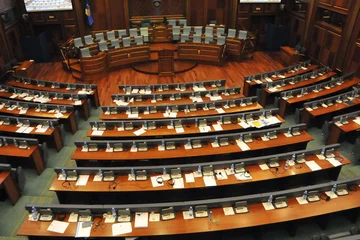
The new prime minister invited Demac to a meeting on 16 February 2008 for the protection of KLA war values. A day later, on February 17th 2008, Kosovo's Assembly declared Kosovo an independent and sovereign state in full compliance with the comprehensive proposal drafted by Ahtisaari. As a guest of the Parliament, Demach attended the Declaration of Independence. Since then, Kosovo has been recognised by most developed countries in the world.
On April 29, 2008, the government, led by Thaci, declared Demarci a symbol of Kosovo's independence for the contribution it had made during its activities. The prime minister stated that Demac would now care for the country's institutions, offering him a special pension, a car and a driver. The house where the KLA office was in Pristina was declared a museum. In 2010, Demach received the order from Kosovo President “Kosovo's hero”. He died on July 26, 2018 in Pristina.