4 hours ago
Voting tomorrow for National Council of Albanians in Serbia

Periskopi(8 years ago)
(8 years ago)The elections of the National Council of Albanians in Serbia, which deals exclusively with Albanian issues there, are held tomorrow in the Presevo Valley, with the aim of advancing the rights of Albanians in the field of education, culture and the use of national symbols. Recognition of constitutional law in Kosovo says Albanian rights [...]
Recognisors of constitutional law in Kosovo say that the rights of Albanians there have deteriorated and that those who receive the mandate for council leadership must be unique and advance their national rights.
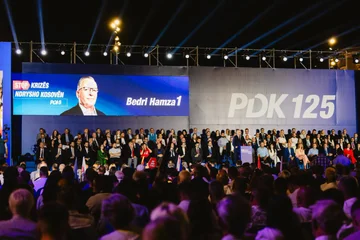
There are six Albanians from different parties who claim to lead with the National Albanian Council in Serbia.
Their pre-election campaign has ended, and elections are held on November 4th.
The Council is an institution founded in 2010 to protect and advance the rights of Albanians in the field of education, culture, information, use of national symbols and use of Albanian writing and language.
But practices show that Serbia has never advanced the rights and freedoms of citizens there.
Nor was the Lapidari of the Liberation Army of Presevo, Medvege and Bujanoc allowed in the valley, which Serbian power had violently removed.
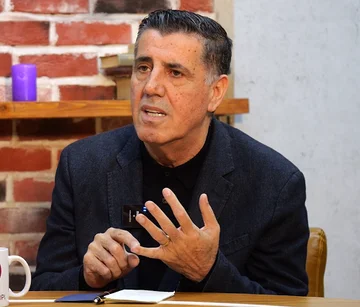
Behxhet Shala, chairman of the Council for the Protection of Human Rights and Freedoms, tells of Kosova Prees, that he is not at all optimistic that this council will be able to produce rights for Albanians there.
“Serbia's state is obliged to recognise the rights it belongs to, according to human rights documents. On the other side of the Valley Albanians have the legitimate right to seek respect for the rights of people there, both Albania and Kosovo, and they have the obligation, as if Serbia has the right to seek rights for Serbs in Kosovo. Serbia even doesn't leave an address without complaining about the rights of Serbs in Kosovo, while the Valley Albanians do not have the rights of Kosovo Serbs as much as 30 per cent. Councils can be formed but cannot produce rights for Albanians there”, Says Shala.
And constitutional law professor Mazum Baraliu says that despite the fact that the council is a constitutional category, the rights of Albanians there except that they have not advanced, they have deteriorated.
“Until now unfortunately despite the fact that this organ is a constitutional category, however, the rights of Albanians in respective municipalities -- the Presevo Valley and Medvedja -- have not improved but have deteriorated. There is constant discrimination, continued permanent action of government and other institutions to undermine property and citizenship people in free flow... They prevent the circulation of institutional segments and their Kosovo representatives from going there and having contacts, to help and support at least morally, and politically why not, the population and political institutions that are there”, he says.
He says that all political forces and citizens there would have to be mobilised and unified, so that they can come up with the most masovically in the election and decide for a structure that is well-repressing their interests.
According to him, the effect of the council also depends on the positive energy of political subjects and people there.
The “depends largely on the positive energy and orientation that should have the political subjects and population of eastern Kosovo selecting the structure in particular, and the adequate head of the National Council of Albanians in the Presevo Valley so that even more so far, by not demeaning and minimising the work that has been done, to advance further, to be more unique and to advance their national, cultural, cultural, language and other rights that go to this aspect of the National Councils of the Presheva Valley, he says.
According to Baraliu, at this time when Serbia claims membership in the European Union, it would have to be conscious and correct in respecting the entire rights of communities there.
Baraliu also mentions Albanians in Sandzak, Serbia, where he says the situation is even worse since neither did Albanian schools nor used the Albanian flag.
Until the rights of Albanians are respected in Serbia, in Kosovo's municipalities that are with the Serb majority population, they freely circulate all symbols and monuments that make up the identities and stories of their community.
Otherwise, the Albanian National Council General Assembly, in which six Albanian lists are competing, consists of 15 members.