6 hours ago
Analyst who said that Serbian blood has been paid by Greece for 30,000 euros.

Periskopi(8 years ago)
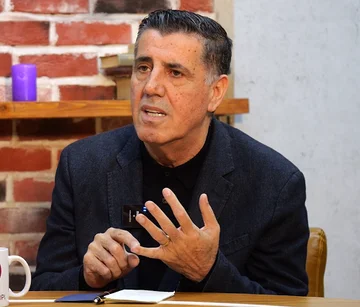
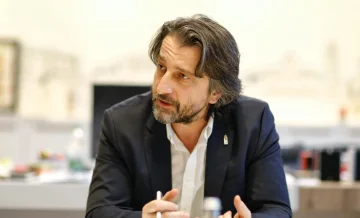
(8 years ago)The renowned analyst, Mustafa Nano, known for his controversial statements, the latest that the co-ordinators have Serbian blood, is on the media people's list, which reports say was paid by Greece. In Albanian media, this list has begun to circulate, when news of Greek portal financing was published [...]
The renowned analyst, Mustafa Nano, known for his controversial statements, the latest that the co-ordinators have Serbian blood, is on the media people's list, which reports say was paid by Greece.
In Albanian media, this list has begun to circulate, at the moment the news of Greek financing of Albanian portals was published, the names of the so-called “journalists purchased” began to circulate informally.
It was the Greek media that first published the names of the media that had benefited from this relative. Meanwhile, neighboring media have drawn more details from this scandal.
One million euros is learned to be the damage the Greek Foreign Ministry has destroyed after the search was conducted. These checks have been signed by Niko Kotzias already resigned. In the meantime, lists have also been published with Albanian journalists, portal owners, well-known actors and politicians who served the interests learned by former Minister Kotzias.
On this list, Nano's name figures this way:
Mustafa Nano, journalist Tv, has benefited 30,000 euros.
Here is Nano's full interview, at the time he was criticised for his statement on Kosovo Albanians.
The renowned analyst, Mustafa Nano, shows the truth of his participation in a conference organised by state news agencies in Belgrade.
According to Nanos “, Kosovo is the Great Judge at the feet of Albanian-Serbian relations”.
There have been some reactions to a position in Belgrade at a joint Serbian-Albanian conference. What was this conference?
It was a conference organised by Tanjug and ATSH, titled “Albanian and Serbian alike, how to move on?”, in which intellectuals and scholars were invited on both sides. Also invited was renowned and extensive Edward Kukan and Serbian Foreign Minister Ivica Dacic, who, by the way, delivered a word I did not like. It was one of those common speeches, where, between rows and even in lines, the Serbian nightmare for lost Kosovo was noticed. It was a speech that didn't seem to me in the spirit that should convey conferences.
In an interview for “Panorama”, Nano shows that his critics understood him correctly this time, but they think differently from him.
But here's where a couple of your positions have caused debate. Do you think you misunderstand?
No, the problem isn't that I misunderstood. The problem is I'm clearly understood. That means I'm attacked by people who think otherwise of me.
What did you say there?
I said very few things. First, I said I had not expected so much to talk about Kosovo at this conference. Serbian intellectuals, but their minister, as I told them, opened and closed their words with Kosovo. They did not speak with Milosevic's language. Even Dacic's language did not speak. But it seemed that Serbs are not yet prepared to see relations between them and Albanians in a perspective, which overcomes their anxiety over Kosovo. And that surprised me, especially if we think it was a meeting between Tirana and Belgrade (there were no guests from Kosovo). In view of this, I said essentially that there is a lot of Kosovo at this meeting, we have to avoid Kosovo a little bit, and we can avoid it, otherwise we need to relax in the usual mud and film the country.
But can this happen? Can Kosovo be disfellowshipped when talking about relations between Albanians and Serbs?
Yeah, it can happen. It even has to happen. For two reasons. First, because the Kosovo issue has taken to the streets and cannot turn; there is no power to turn it back; whatever happens, there is no turning back; even if Kosovars start taking up arms and start fighting each other, there is no going back; and this should be clear to everyone; I wonder why this is not clear. And secondly, because there are other things to talk about, that can be exchanges in economics, culture etc., or even if it's a topic that I care about is the exchanges of meetings between intellectuals, academics, journalists, so that they can confront and bring together ideas, thoughts, visions about history, about each other, about things we share.
This has caused debate, among other things. That you said, according to your critics, that Albanians and Serbs have a lot in common?
Exactly, my topic is that our “problem is Kosovo; when we talk about the relations between Albanians and Serbs, Kosovo is “the great Awake! Other differences are like differences between other nations, like those between France and Germany, like those between Spain and Portugal, etc., etc., even Serbs and Albanians are more similar than others are to each other; and that because we've been neighbours that for centuries, we've lived under equal rulers and in this context, we've given more of each other than we've fought; and that whoever denies the fact that we've given to each other, is an unrecognizant<3>.
What do you mean, when you say we've given each other “
Where would I have it before? We have given and taken so much that it can be said without fear that there are many of Albania's blood, as in Albanian blood, especially in Kosovo, there are many from Serbia. What I said might sound crazy, but it's not. In the arch of the centuries, there have been thousands of interlocked crustaceans that have had their effect. There have also been many changes of population and assimilation on both sides. Edith Durham, whom we Albanians love very much, but also Hahni and others have noted this similarity. Besides, we're a lot of our hostility, but this hostility is another one of my thems, which I've elaborate on in the book “Sandwich” It's late, and it's no longer than 150 years old. Then, even culturally we have given and received. Look at our oral traditions, which we use to create an emulsive climate, we use it to say that “we are in the cradle of oral traditions in the Balkans “, at a time that the truth is that there is no exclusive Serbian, Bosnian, Albanian, Albanian tradition, etc., but there is a Balkan oral tradition, that Balkan oral tradition is a “intin ventron” and that every national tradition is born, not the cradle of this Balkan tradition. And so, I think it's incomprehensible, even ridiculous, arguing academics and historians to steal this Balkan tradition and make it their own. Obviously, even things that unite us, we quickly turn them into things that divide us, and that is absurd. You want more? There are also words that we borrowed from each other. There are words of Albanian, the word comes, that are of Serbian origin, such as buckets, walks, irrigation, yogurt. Even the word “water”, which American Albanians have used to baptize the famous organisation “Vatra”, is of Serbian origin. Not to talk about what we have in common from the Ottoman occupation, like trade, anger, come on. And I'm surprised how the man from the title “Provociate”, that I've chosen for my program.
Why, are they mad?
Why, don't you know? There are those who have refused to come into my program simply from the name “Provocija”. By the way, the Idro Sefer who moderated one of the conference sessions started discussing with me this very question: Why this name for your TV program? Looks like he's impressed. But he shouldn't.
And what was your answer?
My answer was in the spirit of the clothes I defend: I wanted to convey to Albanians the message that with Serbs it is not only the hostility that keeps us connected and that Serbian things are not foreign and hostile rulers for us. You know, that sounds surreal, or least provocative, but it's neither surreal, nor provocative. It seems to us this way because we've moved from the cradle to the idea that Serbs are our eternal enemies, that they can be nothing but our enemies, and that we Albanians can't be defined otherwise, except through hostility and hatred towards Serbs. This has been true at certain times in the bow of the last 150 years, but not before. And there's no need for design in the future. Especially if we think Kosovo will be less and less a problem.
He was also impressed that you called on the Presevo Albanians not to live with the dream of the union. I was in Presevo. And I saw that Albanians there held themselves hostage to a reception, a prospect of joining Albania or Kosovo. They were waiting for Godot. And that rendered them, kept them in a frozen state, in a situation between, Sandiitch, made every integration effort in the Serbian Republic meaningless. Those Albanians hurt me. However, this is a common thing in the Balkans. In the same frozen situation, even worse, are the Serbs of Mitrovica, who have minds in Belgrade, not in Pristina. So do Bosnian Serbs. So do the Albanians of Macedonia. Even the Greeks of Albania think about Athens. And I mentioned all of this. It's not like I only mentioned Presevo Albanians. And I think all day long that this is a crazy situation that nobody in the Balkans cares about. Rather, everyone wants to perpetuate this freeze. All these sides try to encourage/live conflicts. In the face of these efforts are our elites, the political and cultural ones whose members compete in show-offs about who to pour more fuel on conflict fire. And as they do that, they call themselves patriots. And to me, doing the opposite, these idiots call me an anti-Albanian, servant of Serbian interests. And you've noticed the most beautiful, that our elites attack the Serbian elites and vice versa? It's a war that's been fought between the likes. They're closed-minded elites who don't care about peace and truth. For me, we have to start everything by cutting off the influence of our elites.