19 minutes ago
Murati urges political dialogue with Serbia

Periskopi(9 years ago)
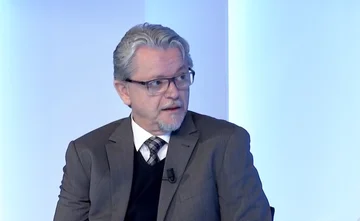
(9 years ago)The chairman of the Movement for the Union, Valon Murati, has said that before it is late with any solution that Kosovo could leave in this judicial and political dysfunction in which it is found, any potential for real political dialogue with Serbia should be fully exploited. According to him, resolving the problem between Kosovo and [...]
According to him, resolving the problem between Kosovo and Serbia has no other way but political dialogue, in which the main outstanding issues between the two states would be placed.
This is the complete opinion of the Murat:
Serbian internal dialogue for Kosovo: do we have answers?
Serbia is continuing the game with two chairs, not only at the level of geostrategic reports West-Russia, but also in relation to access to Kosovo. One approach continues to be aggressive, whether in the international arena or in the interior, and is primarily represented by Daciqi and Djurici, while the most moderate one represented, not by chance, by Vuciqi.
In the international arena Serbia, more intensive than before, is making all efforts to diminish Kosovo's citizenship, especially its international representation. As a result of this policy, but also of other international circumstances, Kosovo is not only far from membership in the UN and the EU, but has so far failed to membership in those organisations in which it has also progressively had the greatest prospects.
Non-membership in U NCO, non-applicating the Council of Europe and Interpol, due to this coordinated Serb-rus pressure, are some of the failures in foreign policy that harm Kosovo's functionality even in the internal plan. Even these days of Dachchiqi, considering a personal success of confusion created for attracting recognition of Kosovo's independence on Suriname's part, warned that he would not stop this approach in relation to Kosovo.
On the other hand, Vuciciqi has long begun to take a more cautious approach, even calling what he has appointed as a “dialog inside Kosovo”, which would lead towards a historic Albanian-Serbian agreement, from which both sides would come out victorious. Without ever concrete, he has made efforts to bring messages to Serbian society, that the return of control over all Kosovo is impossible, that the winners should be both sides, and that we must prepare for painful compromises.
The whole debate is also initiated as a suspension of efforts to amend the Serbian constitution, which envisions Kosovo as part of it, and is problematic for finalising Serbia's EU accession negotiations. Serbian politics, including Vucinqi, is clear that the battle for Kosovo is lost, so until now has made all efforts to reveal what is possible.
The international plan has been aggressive in efforts to delegate Kosovo's independence; in reports with the EU, efforts have been made to be co-operative, reaching out in Brussels agreements a little bit more than guarantees the Ahtisaari Pack for the Serb minority; while in relation to Kosovo Serbs, creating and controlling Serbian List, they have strengthened opportunities that by using all constitutional preparations guaranteed for Serbs, make the state of Kosovo more dysfunctional.
The internal political chaos in Kosovo cannot produce sustainable policies either in international relations or in relation to Serbia. Stalled in the ongoing internal conflicts, in the constantly premature elections producing fragile, difficult-made governments within three months, Kosovo, especially Albanian political representatives, almost have no answer for the situation Serbia is imposing on but also coming as a product of international circumstances.
In the international plan, we are on a full defensive, where successive decisions are withdrawal from application to U NESTO, the Council of Europe and Interpol. On the other hand, in relation to Serbia we usually have ad hoc reactions and without a clear strategy. Serbian internal dialogue on Kosovo is responding with conflicted internal policy rhetoric rather than with vision to use this moment for resolving the Albanian-Serbian conflict.
The president's initiative to establish a team of unity for talks, more than late, comes again as a misproposed proposal in progress. Instead of initially proposing internal dialogue for a common platform, it is talked about names, almost dialogue is technical and expert issues, not as it should be, purely political issues. On the other hand, part of the opposition refuses any co-operation, yet not focusing on the lack of common platform, but on the technical results so far and on parliament's resolution of the talks.
The resolution of the Albanian-Serbian problem, respectively, of the problem between Kosovo and Serbia, has no choice other than political dialogue. So, before it takes a toll on any solution that Kosovo could leave in this judicial and political dysfunction in which it is found, any possibility for a genuine political dialogue with Serbia, in which the main outstanding issues between the two states should be fully exploited.
Before continuing with the current logic of dialogue (in which only Kosovo is spoken) which would leave us at a very dangerous domestic status quo, it would be good to sit down and determine what should be located at the negotiating table with Serbia. The Movement for the Union, since 2010, has come up not only with the proposal for the need for a political dialogue, but has also introduced the platform for the selection of Albanian-Serbe Affairs. Both then and today, we consider reciprocity should be the basic principle in which future negotiations should be held. And that reciprocity implies that it should be talked not only about Kosovo and the position of Serbs in it, but also about Serbia and Albanians living in the three municipalities of Presevo, Bujanoc and Medvedja.
As the Movement for the Union we have been negotiating since then and we continue to be convinced today that only full implementation of the reciprocity principle for the three municipalities with eastern Kosovo Albanians and three Serb municipalities in northern Kosovo (Leposaviqi, Zubin Potoku and Zvecani) would pave the way for resolving Albanian-Serbian problems. This reciprocity does not mean at this moment re-determination of borders even because of international conunctures, but implies equal rights for Serbs in northern Kosovo and for Albanians in eastern Kosovo. Such a solution would pave the way in the future for the comprehensive and complete resolution of reports between Kosovo and Serbia.
Let's not forget that Serbia only removing Kosovo from its constitution and showing “structure” in the dialogue for “the abnormalisation of the reports with Kosovo, without having to recognise Kosovo, opens its doors to the EU. While Kosovo, with a dialogue that does not lay down fundamental problems between the two countries, is at risk of remaining dysfunctional and a always troubled state, not now opened by Serbia but indirectly by Serbian political representatives dependent on Serbia. Only a dialogue that would create conditions for changing the Kosovo Constitution, without the Serb blocking privileges, can make Kosovo a functional state. Otherwise, if we continue with this political sluggishness, with this lack of vision and courage, with this political division, it is certainly very likely that we will miss out with this favourable situation to open within us the debate about how we see the resolution of reports with Serbia and future dialogue with it. Remaining within narrow constitutional, judicial or even party frameworks will bring us results that we will hardly repair in the near future.
On the other hand, refusing talks or presenting difficult, feasible conditions on the other side will inevitably lead to the same results. Kosovo will remain a state that will always be troubled in its functionality, while interethnic reports, among other things, will continue to remain problematic for years to come. To overcome this situation and exploit the moment created even in Serbia, the moment of knowing its need to be part of the EU requires that we courageously, at the negotiating table, prepare for solutions to vital political issues between Kosovo and Serbia, not get involved in talks addressing only one Serb side.