By chance or by plan, Australian Aboriginals 12, 000-year-old civilization? (Video/Photo)

 (9 years ago)
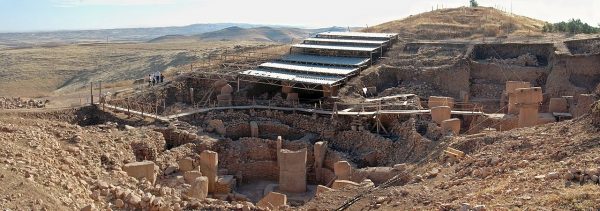
One of the most turbulent archaeological sites is Gopekli Tepe, and now the mystery has deepened further. Gobekli Tepe is a country that has awakened the interest of archaeologists, thanks to the fact that it is a 12,000-year-old megalistic complex, which has remained a mystery since it was first discovered 20 years more [...]
Gobekli Tepe is a country that has awakened the interest of archaeologists, thanks to the fact that it is a 12,000-year-old megalistic complex that has remained a mystery since it was first discovered 20 years ago.
However, the country has caused archaeologists to reconsider what they thought of primitive society.
The primitive society may not have been so primitive that it was able to build monuments that had columns weighing between 45 and 65 tons that were carved in large numbers and symbols and exceeding anything archaeologists thought would be possible during today's time period, reports “Disclose”, broadcast Periscope.
https://www.youtube.com/watch?v=dQ8 qHZRu6o

Archaeologists found carvings in the site that seems to describe a comet that could have caused major global change in climate, a cataclysmic event that could have wiped out people responsible for building the Gopek Tepes. Researchers from the University of Edinburgh published a letter stating that this could have happened.
They said that between 15,500 and 11,500 years ago this was a period known as “Yunger Dryas” (10, 000 to 10, 800 years) and this was a period that experienced a dramatic climate change.
Archaeologists have reached an agreement that Gobekli Tepe is at least 12,000 years old and has placed it in the period of “Yunger Dryas”.
Gobekli Tepe is said to have been buried 1,000 years after creation. Archaeologists do not know whether this was deliberately done by humans or was due to natural mother's events.
Now there is another theory for Gopekli Tepe where scholar Bruce Fenton has come up with a theory that could have been built by Australian Arabs.
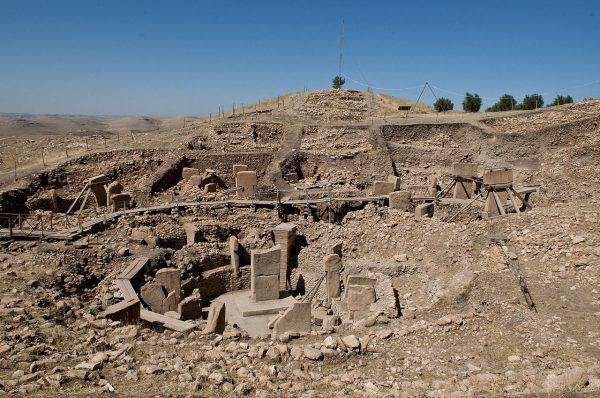
Fenton focused on cross-cultural analysis at Gobekli Tepe along with Arnhem Land located in the northern part of Australia, after he found that many of the symbols were very similar.
A picture of one of the pillars in Gopekli Tepe appeared with a symbol painted on it and another picture of the chest of an Australian with the same symbol. The symbol is used by Aboriginals to show two sitting people and sharing knowledge.
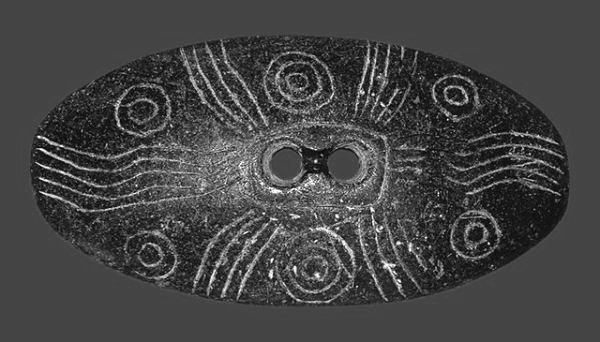
At one of the other pillars, Fenton said he had identified a symbol that was reserved for one of the most sacred objects of Aboriginal culture, the Chiringa stones. He said he has found what he thinks are the stones of 12,000-year-old Churing in Turkey that is related to the Gopekli Tepe culture.
They reportedly show the concenterous circuits that the Aboriginals used to show tearholes, while the zigzag lines are said to be representatives of the waterways.
Fenton went on to say that the carvings at the Gobekli Tepe demonstrated the monomanist attempt to end the catalysm. He said the entire purpose of the complex had been to overturn what was happening during Younger Dryas (about 10,000 to 10, 800 years). /Periscopi/